OEDE 기획안OEDE · CONNECTING LEARNING ACROSS THE WORLD
흩어진 자료와 사람을 연결해, 학교 안팎의 배움으로Connecting resources and people for learning in school and beyond
좋은 교육자료와 배움을 도울 사람들은 이미 곳곳에 있습니다. OEDE는 필요한 자료와 도움을 함께 찾고, 활용한 경험을 쌓아 다음 사람과 나누는 구상입니다. 교과서플러스의 연결 구조를 국내외로 넓혀, 학교 안팎의 학습자가 공부를 시작하고 이어 가도록 돕습니다.Useful resources and people who can help are already all around us. OEDE brings relevant materials and support together, preserves experience from using them, and shares it with others. It extends the Textbook Plus approach across regions and countries to help learners in and beyond school begin learning and keep going.
기획·검토 문서 · 개정 2026.11.03 · 미국·국제 적용 검토 추가
자료를 찾는 데서, 함께 배우고 경험을 나누는 데까지From finding resources to learning together and sharing experience
교육자료는 풍부합니다. 다만 자료가 여러 곳에 흩어져 있고, 실제 수업에서 어떻게 활용했는지, 어떤 설명과 도움이 효과적이었는지는 함께 남지 않는 경우가 많습니다. OEDE는 자료를 연결하는 데서 한 걸음 더 나아가, 어떤 학생에게 어떻게 활용했고 무엇을 바꾸었는지까지 축적하고 공유하려 합니다. 다음 학습자와 교육자가 그 경험을 바탕으로 자신에게 맞는 배움을 이어갈 수 있도록 하는 것입니다.Learning resources are abundant, but they are scattered, and the experience of using them often goes unrecorded. OEDE connects resources and preserves how they were used, with whom, and what was adapted, so that others can build on those experiences.
교과서플러스가 교과서의 단원에 다양한 학습 블록을 연결한다면, OEDE는 그 구조를 더 넓은 배움으로 확장합니다. 설명과 탐구 활동뿐 아니라 교사·멘토의 도움, 번역, 상담과 지역 지원 서비스도 필요에 따라 연결할 수 있습니다. 설명 자료나 번역 도구, 상담 창구를 각각 연결 가능한 모듈로 두고, 지역과 기관이 필요한 것을 골라 붙이는 방식입니다. 이를 국내외의 학교·대학·평생교육·직업교육과 학교 밖 학습으로 넓혀 가려 합니다.Textbook Plus connects learning blocks to textbook units. OEDE extends this approach to teachers, mentors, translation, counseling and local support. Materials and services can be connected as separate modules, allowing local institutions to choose what they need for schools, universities, lifelong and vocational education, and learning outside school, at home and abroad.
학교에 다니는 학생은 수업에서 만난 주제를 더 깊이 공부할 수 있고, 학교 밖 학습자는 기관이 제공하는 자료와 도움을 통해 공부를 시작할 수 있습니다. 언어가 다르면 번역과 현지 검토를 통해 자료를 이해할 수 있도록 돕고, 등록이나 인정 절차를 기다리는 동안에도 가능한 학습부터 시작할 수 있게 합니다. 어디에 소속되어 있는지와 별개로, 지금 필요한 배움에 접근할 수 있도록 하는 것이 목적입니다.Students in school can explore classroom topics further, while learners outside school can begin studying through materials and support offered by participating institutions. Translation and local review support access across languages, while learners begin what they can before enrollment or recognition procedures are completed.
학습 과정과 결과는 포트폴리오로 남겨 이후의 배움과 연결합니다. 참여 기관이 이 기록을 검토해 이수·학점·자격 등의 인정에 활용할 수 있도록 하되, 인정 여부와 기준은 각 기관이 판단합니다. 필요한 증거와 인정 범위는 학습을 시작할 때 안내합니다. 이렇게 쌓인 자료와 활용 경험은 다시 공유되어 다음 사람의 출발점이 됩니다.Learning processes and outcomes are recorded in portfolios that can support further study. Participating institutions may review this evidence for course completion, credit or qualifications under their own criteria, with requirements explained at the outset. Shared resources and experiences then become a starting point for others.
공부하는 흐름 안에서 필요한 도움을 만날 수 있다면What if the help you need were part of learning?
공부하다가 다른 설명이 필요하거나 누군가에게 질문하고 싶을 때가 있습니다. 그런데 자료는 한곳에, 교사나 지원 서비스의 안내는 다른 곳에 있어 학생이 필요한 연결을 직접 찾아야 할 수 있습니다. 평소의 학습에서도 생기는 이 어려움은 지역이나 언어가 바뀌면 더 커질 수 있습니다. 자료와 사람, 지원을 학습의 흐름에서 함께 만날 수는 없을까요?
OEDE는 교과서 플러스 프로토타입을 발전시켜 이러한 연결을 자연스럽게 만들려는 기획입니다. 학생에게는 필요한 학습과 도움을 보여 주고, 자료와 지원을 잇는 모듈은 화면 뒤에서 작동하도록 구상합니다. 교사·멘토의 설명부터 지역의 교육·행정·상담 지원까지 필요에 따라 이어 가고, 이주나 전학 뒤에도 이전의 배움이 다음 출발점을 찾는 데 도움이 되도록 하려는 것입니다.
우선 학생 화면을 다듬고 협력 지역에서 자료와 지원 연결의 유용성을 확인한 뒤, 여러 언어와 이동·오프라인 환경으로 넓혀 가려 합니다. 공통 기반은 함께 쓰고 지역별 자료와 지원은 현지의 조건에 맞춰 연결하는 방향입니다. 학교 밖에 있거나 이주·재난으로 배움이 끊기기 쉬운 학생에게도 적용 가능성을 살펴보고, 학점제와의 연결은 기관의 검토를 거쳐 논의합니다.
기존과 무엇이 다른가요?What is different?
자료 검색, 교사에게 질문하기, 지역 지원 찾기를 각각 수행하는 장면을 하나의 학습 흐름으로 연결하려는 구상입니다. 학생은 모듈을 조립하는 방법을 몰라도 공부하고 도움을 요청할 수 있습니다. 자료를 활용한 경험은 다시 공유하고, 학습자의 동의가 있는 기록은 다음 학습이나 다른 지역의 교육과정·지원 정보와 연결합니다.The proposal connects finding resources, asking educators questions and locating support within one learning journey. Students can study and ask for help without assembling modules themselves. Experience from using resources is shared, and records can be connected, with consent, to further learning or another region’s curriculum and support.
그래서 어떤 도움이 되나요?Who benefits, and how?
학생·가족
학생과 가족은 이주 뒤에도 자신의 언어에 맞는 설명과 지역 지원을 함께 찾아, 여러 창구를 찾는 수고를 줄일 수 있습니다.After a move, learners and families could find explanations and local support suited to their language and circumstances together, reducing the need to search separate services.
교육자·지원 담당자
교육자와 담당자는 동의한 이전 학습과 요청을 참고해, 학생에게 무엇을 설명하고 어디로 연결할지 검토할 수 있습니다.Educators and support staff could use consented prior learning and requests for help to consider what to explain next and which support to connect.
학교·지역 협력 기관
학교와 지역 기관은 공통 기반에 검증된 자료와 담당 창구를 연결해, 기능을 별도로 만들고 안내하는 부담을 줄일 수 있습니다.Schools and local partners could connect verified resources and support contacts to a shared foundation, reducing duplicated development and guidance.
English
While studying, learners may need another explanation or someone to ask. Resources may be in one place and information about educators or support services elsewhere, leaving students to make the connections themselves. This everyday difficulty can grow when location or language changes. Could resources, people and support meet within the learning journey?
OEDE proposes developing the Textbook Plus prototype to make these connections feel natural. Learners would see relevant content and help, while connecting blocks work behind the interface. Depending on need, the experience could lead to explanations from teachers or mentors and local educational, administrative or counseling support. After a move, prior learning could also help identify the next starting point.
The first steps are to refine the learner interface and test useful resource and support connections with local partners, before extending to multiple languages, mobility and offline access. A shared foundation would connect locally appropriate resources and services. Possible uses would include learners outside school or facing disruption through migration or disaster, with credit-system connections subject to institutional review.
OEDE は、Textbook Plus のプロトタイプを発展させ、こうしたつながりを自然に生み出すことを目指す企画です。生徒には必要な学習内容と助けが見え、それらをつなぐブロックは画面の内部で働く構成を考えています。教師やメンターの説明から、地域の教育・行政・相談支援まで、必要に応じてつなぎます。移住や転校の後も、それまでの学びが次の出発点を見つける手がかりになることを目指します。
Во время учёбы бывает нужно другое объяснение или человек, которому можно задать вопрос. Но материалы могут находиться в одном месте, а сведения о преподавателях и службах поддержки — в другом, и ученику приходится самому искать связи между ними. Эта повседневная трудность может усиливаться при смене места жительства или языка. Можно ли сделать так, чтобы материалы, люди и помощь встречались в самом процессе обучения?
OEDE — это предложение развить прототип Textbook Plus так, чтобы эти связи стали естественной частью учёбы. Ученик видел бы нужные материалы и помощь, а соединяющие их блоки работали бы внутри системы, за интерфейсом. По мере необходимости обучение могло бы вести к объяснениям учителей и наставников, а также к местным образовательным, административным и консультационным службам. После переезда или перехода в другую школу ранее освоенное могло бы помочь определить следующую точку отсчёта.
Сначала предполагается доработать ученический интерфейс и совместно с партнёрами в отдельных регионах проверить полезность связей между материалами и поддержкой. Затем можно рассмотреть несколько языков, условия переезда и работу без подключения к интернету. Общую основу предлагается использовать совместно, а материалы и службы подключать с учётом местных условий. Также предстоит изучить применимость подхода для детей вне школы и тех, чья учёба может прерваться из-за миграции или бедствий. Связь с системой зачётных единиц подлежит обсуждению после рассмотрения соответствующими учреждениями.
01
세계가 함께 쓸 학습의 틀A learning foundation the world can share
한국에서 만든 학습 방식도 다른 나라의 자료와 교육 경험을 만나면 더 넓게 쓰일 수 있습니다. 같은 플랫폼에서 서로 다른 언어와 경험을 나누듯, 교육에서도 여러 나라가 함께 사용할 수 있는 학습의 기본 틀을 설계할 수 있습니다. OEDE는 이러한 질문에서 출발하는 개방형 교육설계 생태계입니다.A learning approach developed in Korea can reach further when connected with resources and educational experience from other countries. Just as a shared platform can accommodate different languages and experiences, education can use a common foundation across countries. OEDE, the Open Educational Design Ecosystem, explores this possibility.
자료가 없는 것이 아니라, 필요한 사람에게 연결되지 못하는 곳이 있습니다.The missing piece is often the connection to the person who needs it.
인터넷과 여러 기관에는 이미 좋은 설명, 수업 자료, 경험, 전문성이 축적되어 있습니다. 그러나 학습자는 그것이 어디에 있는지, 자신의 언어와 수준에 맞는지, 누구에게 도움을 요청해야 하는지 알기 어렵습니다. 흩어진 교육자산을 드러내고, 맥락을 설명하고, 함께 사용하도록 연결하는 플랫폼이 이 기획의 중심입니다.Useful explanations, learning materials, experience and expertise already exist across the internet and institutions. Learners may struggle to find them, judge their relevance or reach the right person. This proposal makes distributed educational assets discoverable, understandable and usable together.
모든 학습자료를 새로 만드는 일에 앞서, 공개된 좋은 자료와 참여자의 경험을 필요한 배움에 연결합니다. 공동의 형식을 여러 지역이 발전시켜 사용한다면, 한 지역에서 만든 설명과 지원 경험이 다른 지역의 학습 기회를 넓힐 수 있습니다. 나라와 언어의 경계를 넘어, 필요한 사람이 공부를 시작하고 이어 갈 수 있게 하는 것이 지향점입니다.Rather than beginning by recreating every resource, the proposal connects openly available quality resources and shared experience to learning needs. A common format developed across regions can help one community’s knowledge expand another’s opportunities. The aim is to help people begin learning and keep going across national and language boundaries.
공통 기능은 함께 쓰고, 자료와 지원은 지역에 맞게Share core functions; adapt resources and support locally
처음부터 여러 언어, 교육과정, 지역 정보를 연결할 수 있도록 핵심 구조를 설계하면, 국가마다 별도 플랫폼을 반복 제작하는 부담을 줄일 수 있습니다. 이는 공통 기능을 재사용하는 개발 전략입니다. 다만 번역과 문화 검토, 현지 자료 정비, 접근성, 서버 운영, 담당 인력의 비용까지 모든 나라에서 같아진다는 뜻은 아닙니다. 공통 기반과 지역별 지원을 구분해 지속 가능한 운영을 설계합니다.A core designed for multiple languages, curricula and local information can reduce duplicated platform development. This is a strategy for reusing shared functions. Translation, cultural review, local resource maintenance, accessibility, hosting and staffing still require context-specific investment; shared infrastructure and local support need a sustainable operating model.
별도 구매비 없이 이용할 수 있는 공개 교육자료를 연결하면, 학습자가 자료 구입 부담을 줄이며 좋은 배움에 접근할 수 있습니다.Connecting openly available educational resources that require no purchase can reduce material costs and broaden access to quality learning.
공개 교육자원(OER)은 허용된 조건에 따라 재사용·수정·공유할 수 있는 교육자산입니다. UNESCO는 이러한 자원의 품질과 포용성, 공유 역량, 지속 가능성과 국제 협력을 함께 강조합니다. OEDE는 허락된 좋은 자료를 더 쉽게 발견하고 연결하는 방식을 지향하며, 무료 열람과 재배포 허용 여부는 구분해 출처와 이용 조건을 표시합니다. UNESCO OER 안내Open educational resources can be reused, adapted and shared under their permissions. UNESCO links quality and inclusive OER with capacity, sustainability and international cooperation. OEDE aims to make permitted resources easier to discover and connect, while distinguishing free viewing from permission to redistribute and displaying provenance and terms.
자료는 원래 위치를 유지하고, 활용 경험이 다시 연결됩니다.
여기서 교육설계자산은 콘텐츠뿐 아니라 설계 의도, 적용 맥락, 학습자의 반응, 수정 이력과 교육자의 성찰을 포함합니다. 이미 축적된 배움이 다른 사람에게 이어지도록, 자료의 기존 위치와 관리 주체를 존중하면서 활용 경험을 다시 연결합니다.Educational design assets include content, design intent, context, learner responses, revisions and educator reflection. Resources retain their existing locations and custodians while experience is connected for others to use.
국제 적용 검토 · INTERNATIONAL APPLICATION
교과서는 달라도, 배움은 이어질 수 있을까?Different textbooks. Connected learning.
미국의 주·교육구마다 다른 학습기준과 교재는 OEDE에 중요한 질문을 던집니다. 서로 다른 자료가 같은 개념을 어떻게 설명하는지, 다음 학습에 무엇이 필요한지를 교사와 학습자가 함께 살필 수 있을까요? 적용 가능성은 현지 교육과정과 자료 선택권을 존중하면서 이 연결을 얼마나 정확하고 유용하게 만드는지에서 검토할 수 있습니다.Differences in standards and materials across U.S. states and districts pose a practical question for OEDE: can teachers and learners see how different resources explain a concept and what is needed next? Its potential should be assessed through accurate, useful connections that respect local curricula and resource decisions.
2026.11.03 검토 · 미국 공립 K–12의 세 주 사례와 캐나다·호주·핀란드를 비교했습니다. 아래 적용안은 공식 자료를 바탕으로 한 설계 제안이며, OEDE의 현지 도입·기관 승인·학습효과가 확인되었다는 뜻은 아닙니다.Reviewed 3 November 2026. This section compares three U.S. public K–12 jurisdictions with Canada, Australia and Finland. The proposed applications draw on official sources; local adoption, institutional approval and learning gains for OEDE have not been established.
미국 교육자료 선택의 제도적 배경How instructional materials are selected in the United States
캘리포니아 교육부와 텍사스 교육청의 공식 안내는 학습기준, 교수자료의 심사·채택, 지역 교육기관의 자료 선정을 구분합니다. 캘리포니아는 학습기준·교육과정 프레임워크·교수자료의 역할을 설명하며, K–8의 주 채택과 9–12의 지역 채택을 구별합니다. 텍사스도 IMRA를 통한 주 승인과 교육구의 구매 선택, 추가 지원금 조건을 별도로 안내합니다. [U2][U3]Official guidance from California and Texas distinguishes learning standards, materials review and adoption, and local resource selection. California explains the roles of standards, curriculum frameworks and instructional materials, distinguishing state adoption for K–8 from local adoption for grades 9–12. Texas likewise separates state approval through IMRA, district purchasing choices and additional funding conditions.
한편 여러 주가 영어·수학의 공통 학습기준을 공유하기도 합니다. 공통 기준을 사용한다는 사실이 같은 교과서나 같은 수업 진도를 사용한다는 뜻은 아닙니다. 미국의 교육자료를 이해하려면 주·학년·교과별 기준과 지역의 선정 절차를 함께 확인해야 합니다. [U1]Some states share English language arts and mathematics standards. Shared standards do not imply identical textbooks or classroom pacing. Understanding U.S. instructional materials therefore requires attention to state, grade and subject standards alongside local selection procedures.
이러한 제도적 차이를 바탕으로, OEDE는 현지의 자료 선택을 존중하면서 서로 다른 교재·설명·활동이 어떤 개념과 학습기준에 연결되는지 교사가 검토하도록 설계할 수 있습니다. 이는 아래 공식 자료에서 도출한 적용 제안입니다.These institutional differences inform the OEDE proposal: respect local resource choices and enable teachers to review how different textbooks, explanations and activities connect to concepts and standards. This is a design proposal drawn from the sources, not an institutional endorsement.
미국에서는 주와 교육구를 함께 봐야 합니다U.S. entry points depend on both state and district decisions
학습기준Learning standards무엇을 알고 할 수 있어야 하는가
심사·채택Review & adoption어떤 자료가 어떤 절차를 거쳤는가
지역 선정·구매Local selection누가 선택하고 비용을 부담하는가
수업·학습 확인Classroom evidence학생이 실제로 무엇을 이해했는가
세 주의 제도와 OEDE의 출발점 / Three state examples and proposed entry points
사례 Jurisdiction
공식 안내에서 확인한 점 Verified context
OEDE 적용 제안 Proposed application
캘리포니아California
K–8은 주 채택 절차가 있고, 9–12의 채택은 지역 권한입니다. 지역은 기준에 맞는 비채택 자료도 검토·선정할 수 있습니다. [U2]The state adopts K–8 materials; grades 9–12 are locally adopted. Local agencies may also select non-adopted materials aligned to standards.
대상 학년을 먼저 정하고, 교사가 검토할 기준·자료 대응표를 만듭니다. 승인 교과서 자격을 주장하지 않고 보조 연결 활동부터 협의합니다.Specify the grade range and prepare a teacher-reviewed alignment map. Discuss a supplementary pilot without claiming state-adopted textbook status.
텍사스Texas
IMRA를 통한 주 승인과 교육구의 구매 선택은 다릅니다. 승인 제품 구매가 일괄 의무는 아니지만, 추가 지원금에는 별도 조건이 있습니다. [U3]State approval through IMRA differs from district purchasing decisions. Approved purchases are not universally mandatory; additional funding has separate conditions.
TEKS의 학년·항목·버전과 자료의 대응 범위를 제시합니다. 시범수업, 정식 구매, 주 심사·지원금 자격을 각각 검토합니다.Identify the TEKS grade, item, version and mapping scope. Treat piloting, purchasing and state review or funding eligibility as separate steps.
뉴욕New York
지역 교육위원회·교육구가 주 학습기준에 기반한 교육과정, 교재, 범위·진도를 결정합니다. [U4]Local boards and districts determine standards-based curricula, materials, scope and sequence.
교육구 교육과정 담당자와 교사가 실제 단원·교재를 바탕으로 공동 설계하고, 현지 자료 검토 절차를 따릅니다.Co-design with curriculum staff and teachers around an actual unit and textbook, following local review procedures.
이 비교는 세 주의 공식 안내에 근거한 사례 검토입니다. 실제 교실의 교과서 사용률, 시장 규모, 미국 50개 주의 전체 규칙을 조사한 결과는 아닙니다. 기준에 연결된다는 표시만으로 구매·지원금·학점 인정이 따라오지는 않습니다.These are three official-policy examples, not a survey of classroom textbook use, market size or all 50 states. A standards mapping does not by itself establish procurement eligibility, funding eligibility or academic credit.
하나의 개념을 연결하되, 요구하는 배움은 보존합니다Connect a concept while preserving what each standard asks learners to do
예를 들어 서로 다른 교재에서 ‘동치분수’를 공부하는 두 교실을 생각할 수 있습니다. 캘리포니아 4.NF.1은 시각적 모델을 통한 동치의 설명과 동치분수의 인식·생성을 다룹니다. 텍사스 4.3(C)는 여러 방법으로 두 분수의 동치 여부를 판단하게 합니다. 주제가 겹쳐도 요구하는 수행은 완전히 같지 않습니다. [U5][U6]Consider two classrooms studying equivalent fractions with different textbooks. California 4.NF.1 addresses visual explanations and recognizing or generating equivalent fractions. Texas 4.3(C) asks learners to determine equivalence using different methods. Shared subject matter does not mean identical performance requirements.
1/2 = 2/4
같은 전체에서, 왜 같은 양일까?Why do these fractions represent the same amount of the same whole?
CALIFORNIA · 4.NF.1
모델로 설명하고 만들어 보기Explain and generate
현지 교재·수업 A / Local lesson A
TEXAS · 4.3(C)
여러 방법으로 같음을 판단하기Determine equivalence
현지 교재·수업 B / Local lesson B
OEDE · 개념에 따른 연결 제안Proposed concept-based connection
자료의 출처와 사용 조건 → 교사의 부분 대응 검토 → 학생의 설명과 피드백Source and permissions → teacher-reviewed partial mapping → learner explanation and feedback
그림: 공식 기준을 참고해 작성한 설계 예시. 두 기준의 완전 대응·공식 교차인정표가 아닙니다.Original design illustration informed by the cited standards. It is not an official crosswalk or a claim of full equivalence.
학생은 쓰던 교재의 단원에서 필요한 그림·설명·질문과 도움을 만납니다. 교사는 자료가 지원하는 수행, 빠진 내용, 수정한 이유를 남깁니다. 다른 지역으로 이동한 학습자에게는 이전 기록을 교사가 읽어 다음 활동을 정하는 참고 자료로 제시합니다. 자동 학년 배정이나 학점 전환으로 처리하지 않습니다.Learners start from their current unit and reach relevant explanations, questions and support. Teachers record what a resource supports, what is missing and why it was adapted. For a learner moving between regions, previous work can inform the next teacher’s decision; it does not automatically determine placement or credit.
연결 하나에는 관할지역·기준 버전·학년·교재 판본·언어·출처·이용허락·검토자를 남기고, ‘직접 대응 / 부분 대응 / 비교를 위한 연결’을 구별하도록 제안합니다. 공통 개념은 연결의 출발점이며 현지 목표와 맥락을 지우는 기준이 되어서는 안 됩니다.Each proposed mapping should retain jurisdiction, standards version, grade, textbook edition, language, source, permissions and reviewer, and distinguish direct alignment, partial alignment and a comparative connection. A shared concept is a starting point for connection, not a reason to erase local goals and context.
다른 나라에서도, 현지 결정 구조부터 확인합니다Beyond the U.S., start with local decision-making structures
미국 이외의 비교 사례 / Comparative cases beyond the U.S.
국가 Country
확인한 구조 Verified context
공동 설계의 초점 Co-design focus
캐나다Canada
주·준주가 교육을 관할합니다. BC에서는 교육구가 학습자료를 검토·선정하고 학교·교사도 결정에 관여합니다. BC의 규칙을 캐나다 전체로 일반화하지 않습니다. [G1][G2]Provinces and territories govern education. In British Columbia, districts review and select resources with school and teacher involvement; this is not a Canada-wide rule.
대상 주와 교육구를 정해 기준과 자료를 연결합니다. 영어·프랑스어 및 공동체 언어 지원은 실제 학습자의 필요에 맞춥니다.Select a province and district, then map their curriculum and resources. Plan English, French or community-language support around actual learner needs.
호주Australia
전국 교육과정과 주·영토·학교체제별 시행이 함께 존재합니다. 빅토리아의 자료 선정 정책에는 디지털 플랫폼과 영상도 포함됩니다. [G3][G4]A national curriculum coexists with jurisdictional implementation. Victoria’s resource-selection policy also covers platforms and video.
국가 기준과 해당 관할 기준·버전을 함께 확인합니다. 번역 외에 연령·문화적 적합성과 자료 재검토 절차까지 공동 설계합니다.Check national and jurisdictional curriculum versions. Co-design age and cultural suitability and a process for reconsidering resources, beyond translation alone.
핀란드Finland
국가 핵심교육과정 아래 지방 교육과정과 교사의 교수법·자료 선택이 이루어집니다. 국가 기준이 곧 단일 교과서를 뜻하지 않습니다. [G5][G6]The national core is implemented through local curricula; teachers exercise pedagogical and resource-selection autonomy. A national curriculum does not imply a single textbook.
현지 교사와 다학제 탐구의 보조 활동을 구성할 수 있습니다. 참여 횟수보다 교과 목표와 학생의 산출물을 함께 검토합니다.Explore supplementary multidisciplinary inquiry with local teachers. Examine subject goals and learner work, rather than equating participation counts with achievement.
공통으로 가져갈 것은 개념·질문·출처·사용 경험을 연결하는 틀입니다. 교육과정, 언어·문화, 자료 승인과 평가의 권한은 현지에 맞추어야 합니다. UNESCO OER 권고는 공개 라이선스, 문화·언어 적합성, 접근성, 오프라인 이용을 함께 다룹니다. 웹에서 무료로 볼 수 있다는 사실만으로 수정·재배포가 허용되는 것은 아닙니다. [G7]What can travel is a framework connecting concepts, questions, sources and experience. Curriculum, language, culture, resource approval and assessment authority require local decisions. UNESCO’s OER Recommendation addresses open licensing, linguistic and cultural suitability, accessibility and offline use. Free online access alone does not grant adaptation or redistribution rights.
한 단원에서 시작해, 연결의 정확성과 부담을 함께 검토합니다Start with one unit and evaluate both usefulness and burden
첫 협력은 교육구 교육과정 담당자·교사 또는 현지 권한을 가진 학교와, 한 과목·학년·단원으로 시작하는 방안을 제안합니다. 이미 사용하는 교재에 허가된 보조자료를 연결하고, 교사의 판단과 수정 경험을 남깁니다. 이어 다른 지역 한 곳에서 재검토하여 무엇을 그대로 쓸 수 있고 무엇을 바꿔야 하는지 비교합니다.A first partnership could involve district curriculum staff and teachers, or a school with the relevant local authority, working on one subject, grade and unit. Link authorized supplementary resources to existing materials and record teacher decisions. A second context can then test what transfers and what needs adaptation.
자료만으로 먼저 확인하기. 학생 식별정보 없이 목표·자료·부분 대응을 검토합니다. 연결 오류와 빠진 목표를 고치고 현지 검토자를 정합니다.Begin with resources. Review goals, materials and partial mappings without student identifiers. Correct mapping errors and gaps, and identify local reviewers.
작은 수업에서 시험하기. 예시로 4–6주를 제안하되 실제 기간은 학교와 정합니다. 학교·교육구의 도입 검토와 필요한 데이터 처리 조건을 확인한 뒤 수업에 적용합니다. [P1][P2]Try a small classroom pilot. Four to six weeks is an illustrative planning option, subject to agreement with the school. Confirm institutional review and applicable data-handling conditions before classroom use.
학습과 운영을 함께 보기. 학생이 개념을 설명하는 산출물, 잘못 연결된 자료, 교사의 준비·수정 시간, 번역 오류, 접근 장애를 기록합니다. 시작 전 과제와 이후 과제를 함께 보되, 비교집단 없는 변화만으로 OEDE의 인과적 효과를 주장하지 않습니다.Evaluate learning and operation together. Examine learner explanations, mapping errors, teacher preparation and correction time, translation errors and access barriers. Compare initial and later work without treating uncontrolled change as a causal effect of OEDE.
고친 뒤 다음 지역으로 옮기기. 핵심 목표의 대응 오류가 남거나 교사 부담·접근 격차가 커지면 확대를 보류합니다. 수정 근거와 비용을 정리해 다음 지역 교사에게 전달하고, 구매·정식 채택은 별도로 판단합니다.Revise before expansion. Defer scaling if critical alignment errors persist or teacher burden and access gaps grow. Share the revisions and costs with the next local team; decide procurement and formal adoption separately.
운영 설계에는 자료별 권리, 수집 목적과 최소 항목·보관·삭제·재공유, 현지의 검토·수정 권한을 명시합니다. 화면낭독기·키보드·자막·대체텍스트를 점검하고, 지도와 같은 시각자료에는 읽을 수 있는 설명을 함께 제공합니다. 저대역폭·인쇄 대안도 현장에서 시험합니다. 이 목록은 적용 준비안이며 OEDE의 법률·접근성 준수를 인증한 결과가 아닙니다. [P3]The operating plan should specify resource rights, purpose-limited and minimal data collection, retention, deletion, resharing and local review authority. Test screen-reader and keyboard use, captions and text alternatives, including readable explanations of visual maps. Trial low-bandwidth and print options. These are preparation requirements, not a certification of OEDE’s legal or accessibility compliance.
02
자료 선택에서 필요한 도움까지From choosing resources to finding support
OEDE는 교과서 플러스 프로토타입을 고도화·확장하는 기획입니다. 교과서를 중심으로 여러 자료와 사람을 연결하는 출발점은 이어 가되, 학생이 개별 블록을 찾아 조립하는 부담을 줄입니다. 각 자료와 서비스는 독립된 모듈로 연결하되, 학생 화면에는 지금 필요한 설명과 활동, 질문할 곳이 나타나도록 설계합니다. 연결 구조를 알아야만 공부할 수 있는 화면이 되어서는 안 됩니다.OEDE is a proposal to advance and expand the Textbook Plus prototype. It retains the starting point of connecting textbooks with resources and people, while reducing the learner’s burden of assembling separate blocks. Resources and services connect as separate modules, while the learner’s screen presents relevant explanations, activities and places to ask questions. Learning should not require understanding how the modules connect.
학생은 학습을 이어 가고, 내부에서는 필요한 지원이 연결됩니다. 학습 내용 · 학습 지원 서비스 · 교사와 멘토·전문가의 도움을 같은 흐름에서 이용할 수 있도록 구성합니다. 블록의 종류나 기술 구조를 몰라도 공부를 시작하고, 자신에게 필요한 지원을 선택할 수 있어야 합니다.Learners continue studying while relevant support is connected behind the scenes. Content, support services and help from teachers, mentors and specialists belong in one coherent experience. Students should not need to understand the block system to begin learning or choose support.
관점Dimension
교과서 플러스의 출발점Textbook Plus starting point
OEDE의 고도화 방향OEDE development direction
학생의 경험
교과서와 보충 자료 블록을 선택해 학습을 구성Compose learning from a textbook and supplementary blocks.
필요한 내용과 도움을 학습 화면 안에서 자연스럽게 이용Access relevant content and help within the learning screen.
블록의 역할
설명·활동·탐구 자료를 조합하는 단위Units for combining explanations, activities and inquiry resources.
콘텐츠·서비스·인적 지원·지역 정보를 연결하는 내부 단위Internal units connecting content, services, people and local information.
이동과 연속성
교과서와 주제를 중심으로 배움을 확장Extend learning around textbooks and topics.
이전 학습을 바탕으로 새 지역의 언어·교육과정·지원에 연결Reconnect prior learning to local languages, curricula and support.
공유의 범위
자료와 다양한 설명을 연결Connect resources and different explanations.
자료에 적용 경험·설계 판단·지원 관계를 함께 연결Connect resources with teaching experience, design judgments and support relationships.
국경이 바뀌어도, 처음부터 다시 시작하지 않도록A move should not mean starting learning from zero
한국 안에서 전학하거나 해외로 이주하더라도, 동의한 범위의 이전 학습 내용과 기록을 참고해 다음 배움을 설계합니다. 새 지역의 교육과정, 선호 언어, 이용 가능한 기관과 상담 창구를 지역 정보 블록으로 연결하면, 익숙한 학습 화면을 유지하면서 필요한 지원을 바꿔 이어 갈 수 있습니다. 주소가 바뀌는 일과 배움이 끊어지는 일을 분리하려는 구상입니다.For moves within Korea or overseas, prior learning and consented records can inform the next steps. Local information blocks connect curricula, preferred languages, available institutions and counseling contacts. The learner can keep a familiar interface while support adapts to the new setting, separating a change of address from a break in learning.
이 문서의 내부 블록 연결, 국가 간 연속성, 상담·행정 지원과 학점 연계는 앞으로 구현·검증할 설계 제안입니다. 교과서 플러스의 기존 프로토타입과 OEDE의 확장 구상을 구분하며, 현재 사이트에 모든 기능이 완성되어 있다는 뜻은 아닙니다.Embedded support, international continuity, counseling and administration links, and credit-related uses are proposals for development and evaluation. The existing Textbook Plus prototype is distinguished from the full OEDE vision.
03
연결을 지키는 여덟 원칙Eight principles for dependable connections
분산성Distribution
자료를 모두 옮겨 담기보다, 원래 제공하는 기관과 출처를 확인하며 연결합니다.Connect resources with their original providers and sources, rather than moving everything into one repository.
연결성Connectivity
배우려는 주제에 맞춰 자료와 서비스, 도움을 줄 사람을 함께 찾게 합니다.Help learners find resources, services and people relevant to the subject they want to study.
순환 · 축적성Circulation and accumulation
자료를 써 본 결과와 수정 이유를 남겨, 다음 사람이 참고할 수 있게 합니다.Record what happened when a resource was used and why it was revised, so that others can learn from the experience.
재구성 가능성Adaptability
허용된 범위에서 학습 맥락에 맞게 선택·수정·조합합니다.Select, adapt and combine resources within their permissions.
인간–AI 협력Human–AI collaboration
AI는 연결을 제안하고 최종 선택은 사람이 검토합니다.AI suggests connections; people review and decide.
개방성 · 상호운용성Openness and interoperability
서로 다른 기관의 자료와 도구가 함께 작동하도록 공통 정보와 연결 규칙을 정합니다.Use shared information and connection rules so that resources and tools from different institutions can work together.
학습 연속성 · 이동성Continuity and mobility
환경이 바뀌어도 필요한 학습자산과 관계를 다시 연결합니다.Reconnect learning assets and support across changing contexts.
자생적 확장성Emergent growth
참여자가 자료와 활용 경험을 나눌수록, 함께 배우고 돕는 관계도 넓어지도록 합니다.Sharing resources and experience can extend the relationships through which people learn and support one another.
경험이 공유자산으로 성장하는 구조How experience becomes a shared asset
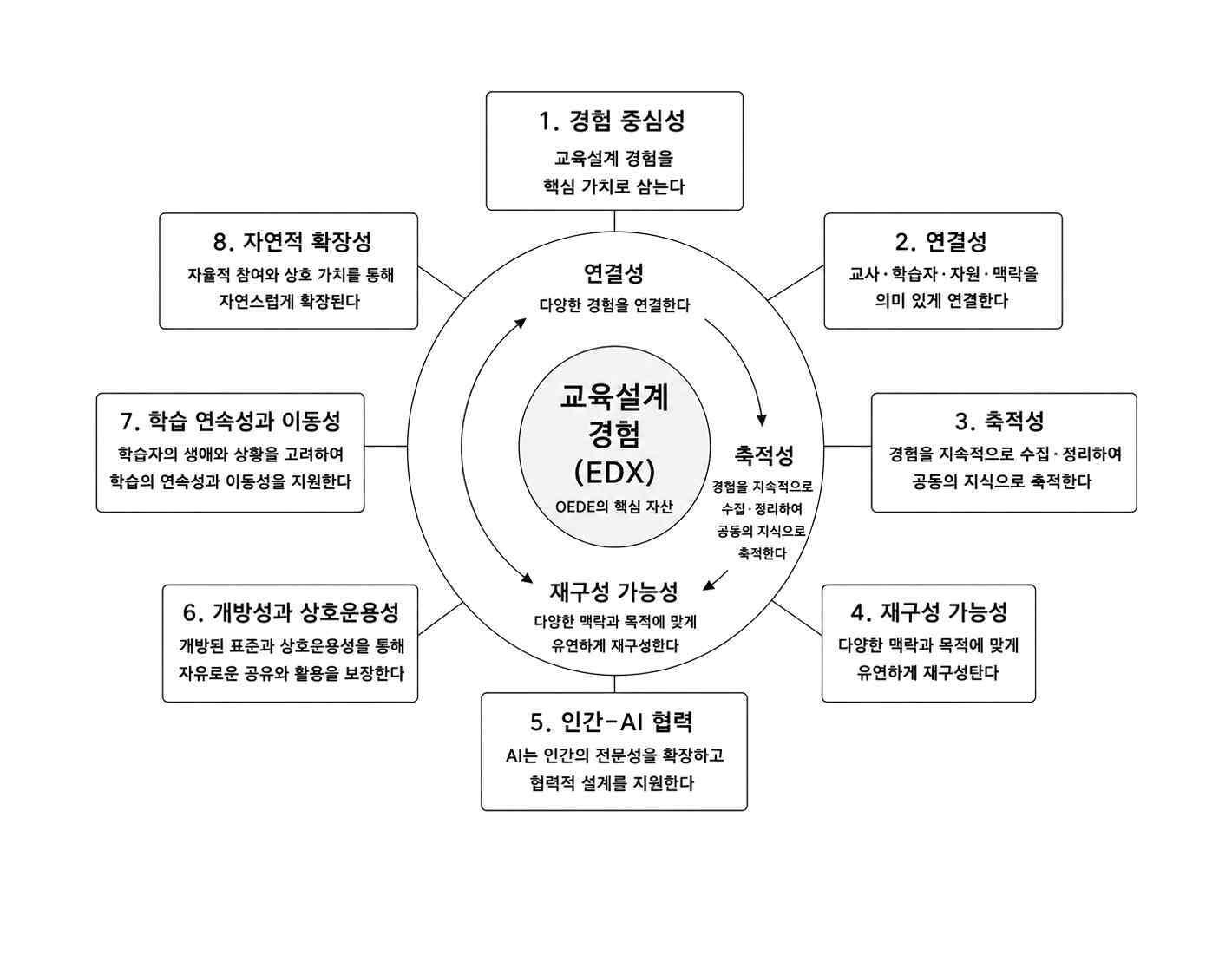
무엇을 보여주는가 중앙의 교육설계 경험을 연결성·축적성·재구성 가능성이 둘러싸고, 주변의 여덟 원리가 생태계의 운영 조건을 설명합니다. 자료 한 개를 공유하는 것과 그 자료의 적용 경험을 다음 수업에 이어 주는 것의 차이를 보여줍니다.The diagram places instructional design experience at the center of connection, accumulation and adaptation, with eight principles describing ecosystem conditions.
활용 장면 은퇴 교사의 활동지를 현직 교사가 활용하면서 대상 학년, 학생의 반응, 수정 이유를 함께 남깁니다. 다음 교사는 자료와 맥락을 함께 참고하여 자기 학급의 수업을 설계합니다.A teacher reuses a retired teacher’s activity and records grade level, learner responses and revisions, allowing another teacher to reuse both material and context.
구현 조건 출처·권리·적용 맥락을 기록하는 공통 양식과 수정 이력이 필요합니다. 원 그림의 중심 용어 EDX는 교육설계 경험을 가리키는 표기이며, 사이트에서는 교육설계자산이라는 상위 개념과 구분해 설명합니다.Shared provenance, permission, context and revision fields are needed. The figure’s EDX label denotes design experience, which is distinguished from the broader asset concept.
04
좋은 수업의 경험을 다음 수업으로Carry teaching experience into the next lesson
발견Discover
연결Connect
활용Use
재구성Adapt
재공유Reshare
은퇴 교사가 공개한 설명 자료를 현직 교사가 발견합니다. 원출처와 권리를 확인한 뒤 자기 학급에 맞는 활동과 연결하고, 학생 반응과 수정 이유를 기록합니다. 다음 교사는 자료와 적용 경험을 함께 참고합니다.A teacher discovers a retired teacher’s resource, checks permissions, links it to a classroom activity and records learner responses and revisions. Another teacher can reuse both the resource and its context.
이는 작동 과정을 설명하기 위한 예시이며 실제 운영 성과가 아닙니다. 재구성은 해당 자료의 이용허락 범위 안에서 이루어집니다.This illustrative scenario is not an operational result. Adaptation remains subject to resource permissions.
자료·교수자·공동체를 선택하는 학습 과정Selecting resources, educators and communities
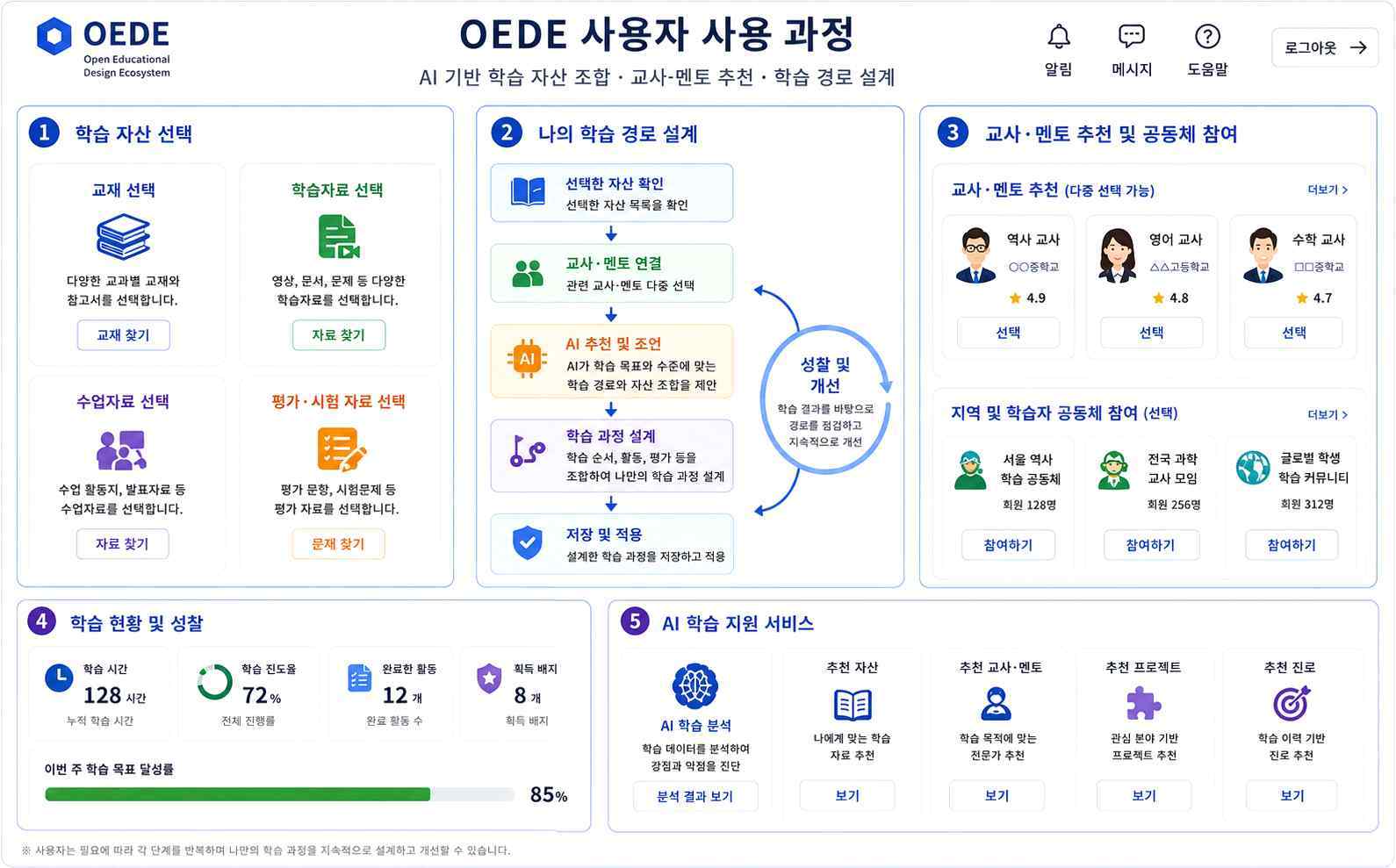
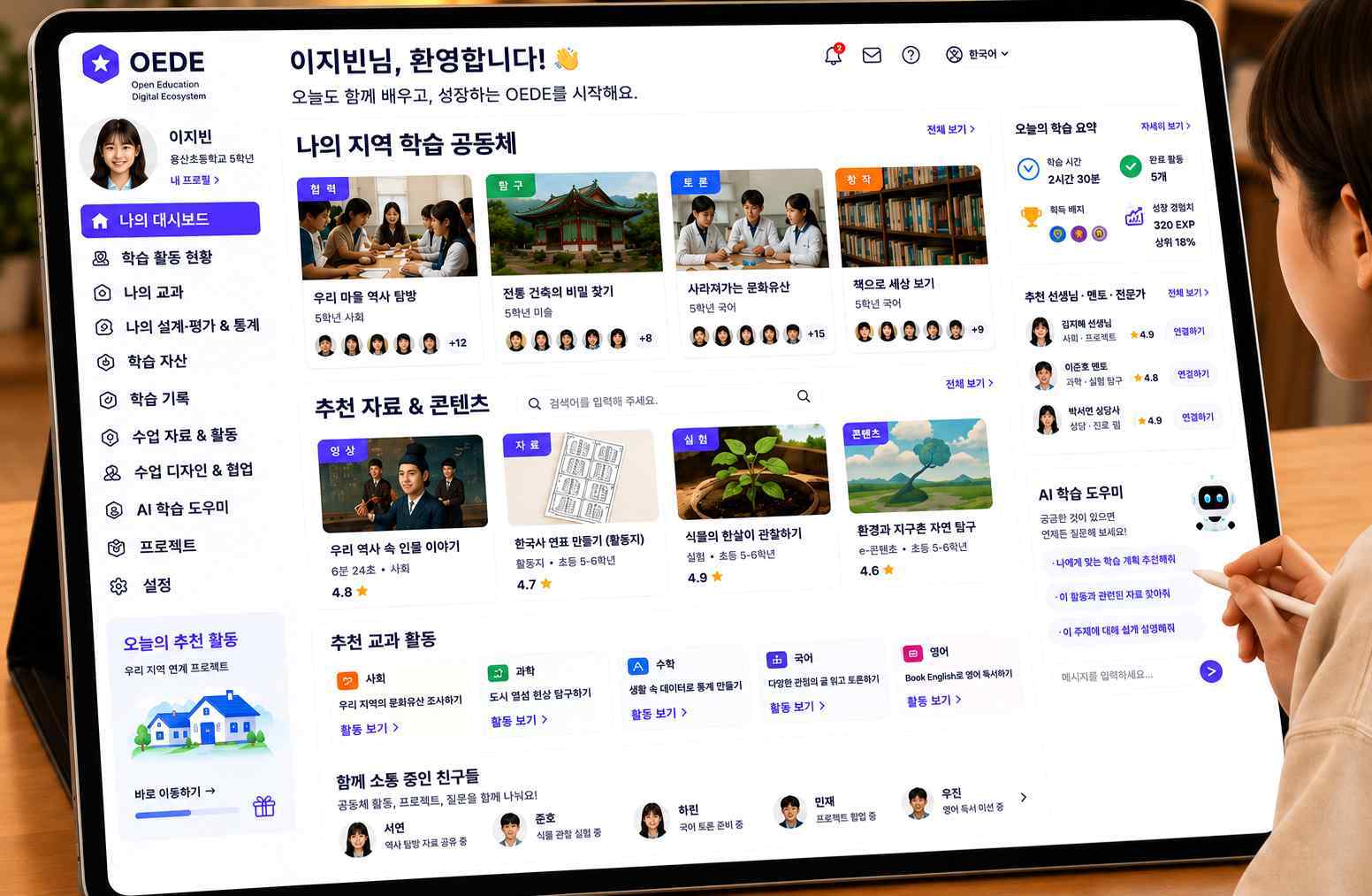
무엇을 보여주는가 학습자산 선택, 학습경로 설계, 교사·멘토와 공동체 참여를 한 흐름으로 표현합니다. 학생은 자료를 받는 데서 나아가 목표에 맞는 자료와 지원 관계를 조합하는 주체로 제시됩니다.The screen connects asset selection, pathway design and participation with educators and communities, presenting learners as active designers of their learning environment.
활용 장면 학생이 어려운 개념의 기초 설명을 선택하고 관련 탐구 활동을 연결합니다. 교사는 선수학습과 활동의 적합성을 검토하고, 필요한 경우 전문가의 설명이나 공동체 활동을 추가합니다.A learner selects a foundational explanation and an inquiry activity; the teacher reviews prerequisites and suitability and may add expert support.
구현 조건 선택 가능한 자료의 범위, 교사의 검토 권한, 멘토 참여 기준과 학생 보호 절차가 필요합니다. 화면의 학습 시간·완료율·참여자 평점은 운영 성과로 해석하지 않습니다.Resource scope, teacher review, mentor eligibility and learner safeguards are required. Displayed times, completion rates and ratings are illustrative.
학습 블록을 조합해 나의 학습 흐름 만들기Composing learning blocks into a personal pathway
개념적 서비스 시나리오
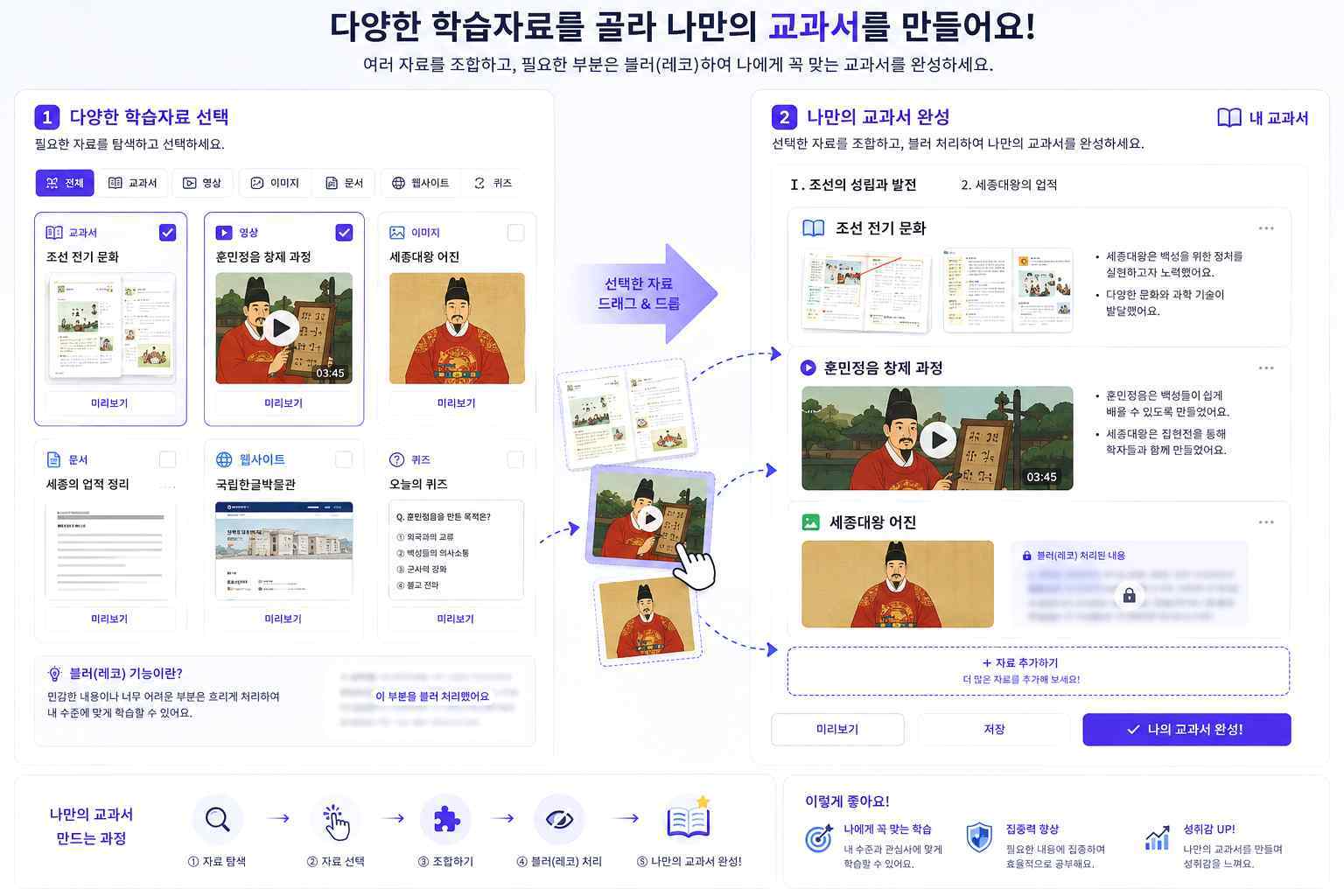
아래는 원고에 제시된 블록 조합 과정입니다. 이번 고도화 기획에서는 이 원리를 내부 연결에 활용하고, 학생 화면에는 학습 내용과 필요한 선택이 자연스럽게 드러나도록 발전시킵니다.The manuscript illustrates explicit block composition. This development proposal applies that principle behind the interface, presenting learning content and relevant choices naturally to the student.
무엇을 보여주는가 서로 다른 자료를 고르고 순서를 조정하여 하나의 학습 흐름으로 구성하는 모습을 보여줍니다. 교과서 플러스의 자료 연결을 OEDE의 재구성과 재공유로 확장하는 접점입니다.The illustration shows selecting and sequencing resources into a learning pathway, connecting Textbook Plus resource linking to OEDE adaptation and sharing.
활용 장면 같은 역사 개념에 대한 교과서 설명, 공공기관 자료와 전문가 해설을 비교하고, 탐구 질문과 자기점검을 연결합니다. 학생의 이해와 교사의 수업 목표에 따라 순서를 조정합니다.Compare textbook explanations, public resources and expert commentary on a historical concept, then add inquiry and self-check activities.
구현 조건 그림 속 교과서 내용을 블록으로 사용하는 경우에는 이용 권한을 확인해야 합니다. 실제 서비스에서는 기존 교과서를 기준으로 링크·허락받은 자료·자체 제작 활동을 연결하는 방식을 우선 검토합니다.Using textbook content as blocks requires permission. The proposed service prioritizes links, licensed materials and original activities around existing textbooks.
05
학생 화면에서는 무엇이 달라질까What would learners see on their screen?
학생 화면의 중심은 블록 목록이 아니라 오늘 배우는 내용과 다음에 할 일입니다. 설명을 읽다 어려움을 표시하면 다른 수준의 설명이나 교사 질문 창구가 연결되고, 활동을 마치면 관련 체험과 다음 학습으로 이어집니다. 지역 지원은 학생이 필요할 때 선택할 수 있는 도움으로 제시합니다.The learner’s screen centers on today’s content and next steps. When a learner signals difficulty, an alternative explanation or teacher contact can appear. An activity can lead to a relevant experience or next learning step, while local support remains available when needed.
이어서 배우기Continue learning
지난 활동과 오늘의 목표를 한 화면에서 확인합니다. 이주·전학 후에도 동의한 학습 맥락을 바탕으로 출발점을 찾습니다.See the previous activity and current goal together, using consented context to establish a starting point after a move.
내게 맞는 설명과 활동Find an explanation and activity that fit
교과 내용에 맞춰 쉬운 설명, 선호 언어 자료, 읽기·영상·체험 활동을 연결합니다. 학생은 이유를 확인하고 다른 선택으로 바꿀 수 있습니다.Connect accessible explanations, preferred-language resources and reading, video or experiential activities. Learners can see why an option was offered and change it.
필요할 때 사람에게 묻기Reach a person when needed
교사·멘토·전문가의 설명이나 지역 교육기관의 상담을 요청합니다. 실제 지원은 참여 기관의 제공 범위와 담당자의 확인을 거칩니다.Request help from teachers, mentors, specialists or local education services within participating institutions’ agreed scope.
경험을 남기고 다음 배움으로Reflect and continue
학습 결과와 성찰을 남기고 다음 활동을 선택합니다. 다음 교사에게 전달할 정보는 학습자가 확인하고 공유 범위를 정합니다.Record work and reflection, select the next activity, and review what may be shared with the next educator.
제작할 때 나누어 살펴볼 네 가지 기능Four areas of functionality to plan and build
분산 자산 · 서비스Distributed assets and services
교과서, OER, 출판사 자료, 교사의 설계 경험과 공공서비스를 독립적인 연결 대상으로 둡니다.Treat textbooks, OER, publisher resources, teaching experience and public services as independent nodes.
연결 · 순환Connection and circulation
자료의 출처와 활용 조건을 보여 주고, 사용 경험을 다음 이용자에게 연결합니다.Show sources and conditions of use, and share experience with the next person using a resource.
협력 · 상호운용 지원Collaboration and interoperability
자료를 찾고 추천받는 기능과 함께, 자료 정보의 공통 양식·이용 권한·접근성을 마련합니다.Build resource discovery and recommendations alongside shared descriptions, permissions and accessibility.
생태계 확장Ecosystem development
협력 기관의 담당자와 갱신 주기, 운영 비용을 정해 연결이 계속 유지되도록 합니다.Agree on responsible contacts, update schedules and operating costs so that institutional and community connections can be maintained.
콘텐츠 블록은 설명과 활동을, 지원 서비스 블록은 학습 도구와 기관 안내를, 인적 지원 블록은 교육자와 상담 담당자의 연결 정보를 담습니다. 지역 정보 블록은 언어·교육과정·접근 가능한 서비스를 연결합니다. 화면에는 이 구조를 모두 펼치기보다 학생의 현재 과제에 필요한 기능을 제때 제시하고, 출처와 담당 기관은 확인할 수 있도록 합니다.Content blocks provide explanations and activities; service blocks connect tools and institutional guidance; human-support blocks identify educators and support contacts; local-context blocks connect languages, curricula and available services. The interface presents what the current task needs while making sources and responsible institutions inspectable.
핵심 기능과 외부 확장을 구분한 구조Distinguishing core functions from external extensions
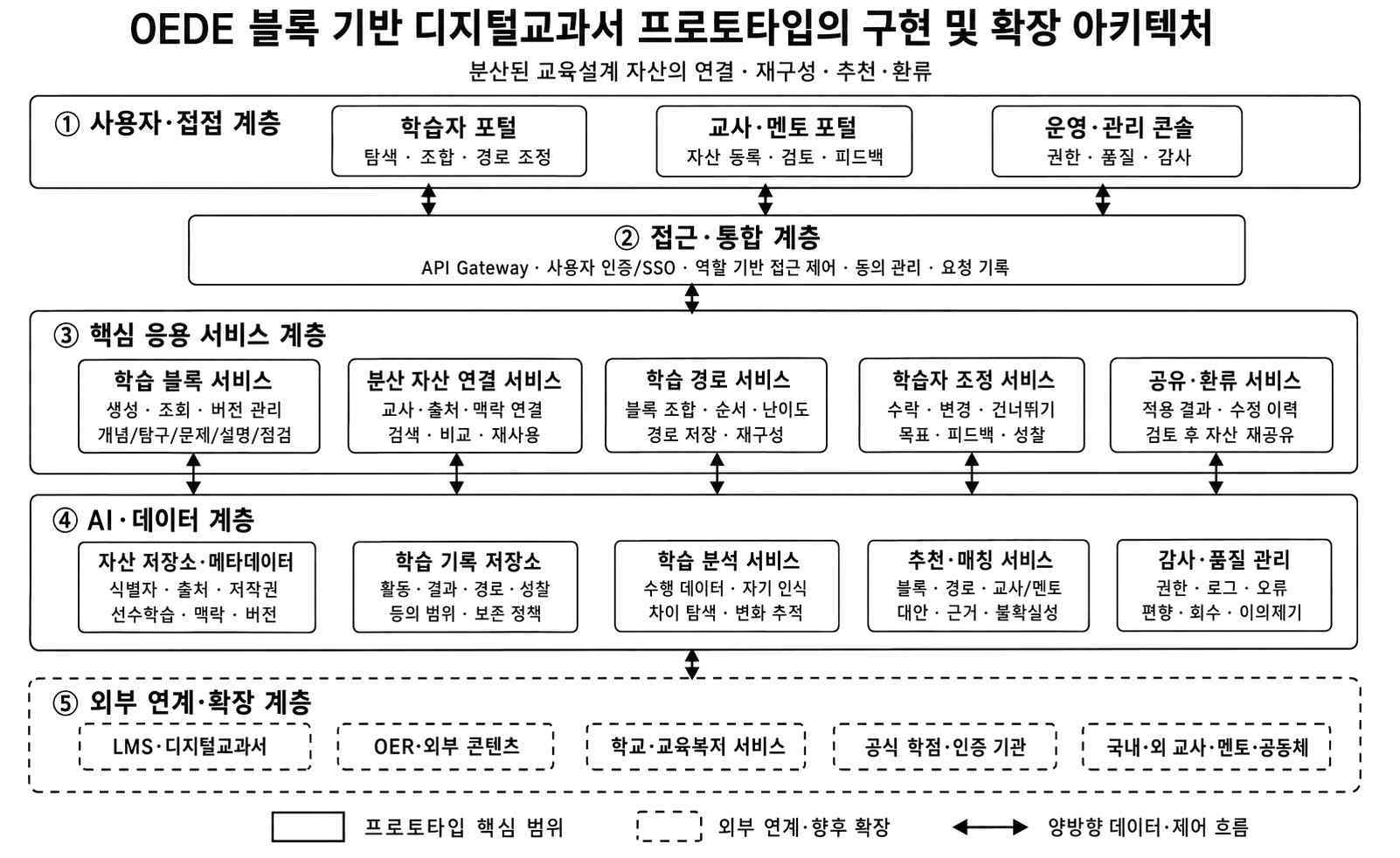
무엇을 보여주는가 학습자·교육자·운영자 접점에서 시작해 접근 관리, 학습 블록과 경로 서비스, AI·데이터 계층으로 이어집니다. 실선은 원고가 제시한 프로토타입 핵심 범위, 점선은 외부 연계와 향후 확장을 의미합니다.The architecture connects user portals, access control, block and pathway services and AI/data functions. Solid and dashed areas distinguish the manuscript’s core prototype scope and proposed extensions.
활용 장면 교사는 자료를 등록하고 검토하며, 학생은 블록을 조회·조합합니다. 운영자는 권한과 자료 품질을 관리합니다. 이후 협약된 출판사·OER·기관 서비스를 외부 연결 대상으로 확장할 수 있습니다.Teachers register and review assets, learners compose blocks, and operators manage permissions and quality. Agreed external services may be connected later.
구현 조건 원고의 구현 기술과 현재 운영 사이트의 기능 일치를 확인해야 합니다. 외부 연계는 서비스별 접근권한·계약·정보 전달 범위를 정한 뒤 진행합니다.Implementation claims must be checked against the current site. External connections require service-specific permissions, agreements and data-transfer rules.
학습자 관점에서 바라본 연결 환경A connected environment from the learner’s perspective
무엇을 보여주는가 자료, 공동체, 전문가와 학습 지원을 학습자의 관점에서 함께 보여주는 종합 예시입니다. 여러 서비스의 정보와 관계를 하나의 학습 흐름에서 이해하도록 하는 구상입니다.This conceptual overview combines resources, communities, specialists and learning support from the learner’s perspective.
활용 장면 학생이 학습 목표에 맞는 자료를 살펴보고, 교사의 피드백이나 멘토의 설명을 참고하며 다음 활동을 선택합니다. 기존 서비스의 자료는 원출처와 함께 연결됩니다.Learners explore relevant resources and use teacher or mentor feedback to choose their next activity, with links retaining original provenance.
구현 조건 추천의 이유, 자료의 출처, 역할별 권한과 접근성이 필요합니다. 화면에 배치된 추천 기능·전문가·공동체가 현재 서비스에서 제공된다는 의미는 아닙니다.Recommendation explanations, provenance, permissions and accessibility are required. Depicted services are not asserted to exist in the current implementation.
06
이동과 공백 속에서도 이어지는 배움Keep learning going through moves and interruptions
학교에 다니는 방식, 거주 지역, 사용하는 언어는 달라질 수 있습니다. OEDE는 특정 집단을 하나의 요구로 묶기보다 각 학생이 지금 필요로 하는 학습과 지원을 확인해 연결하는 방향을 제안합니다. 다음은 구현 가능성을 검토하기 위한 시나리오입니다.School participation, location and language can change. OEDE proposes responding to each learner’s stated needs rather than treating a group as having one uniform need. The following scenarios illustrate directions for development.
학교 밖에서도 이어지는 배움Learning beyond school enrollment
학교 밖 청소년이 학습을 다시 시작할 때, 자신이 아는 내용부터 확인하고 기초학습·독서·프로젝트 자료를 이어 갑니다. 필요하면 지역 학습지원 기관과 진학·복귀 상담 창구를 함께 연결합니다.An out-of-school learner starts from existing knowledge and follows foundational learning, reading or projects, with links to local learning support and education-transition counseling.
재난 이후의 학습 재개Resuming learning after a disaster
가령 네팔의 한 지역에서 재난으로 등교와 통신이 중단된 상황을 가정할 수 있습니다. 현지 기관이 확인한 필수 학습자료와 지원 안내를 묶고, 저장해 읽기·저속 연결·공동 학습 공간을 활용하는 방식으로 배움의 중단을 줄이는 설계를 검토합니다.A hypothetical disaster in a region of Nepal could interrupt school attendance and connectivity. Locally verified learning resources and support information could be paired with offline access, low-bandwidth delivery and shared learning spaces.
이주 가정과 다국어 학습Multilingual learning across migration
고려인·재일동포·다문화 가정 학생을 포함해 누구든, 자신이 선택한 언어와 이전 학습 경험에 맞춰 설명을 찾을 수 있도록 합니다. 국적이나 가족 배경으로 필요를 단정하지 않고, 학생·보호자의 요청에 따라 학교 안내와 통역·상담 정보를 연결합니다.Learners, including Koryoin, Zainichi Koreans and students from multicultural families, can seek resources matching their chosen language and prior learning. Support follows expressed needs, with school information, interpretation and counseling links where requested.
해외 이주 후에도 익숙한 시작점A familiar starting point after moving abroad
이전의 학습 목표와 결과를 새 지역의 교육과정과 함께 살펴보고, 부족한 연결 부분을 보충합니다. 현지 학교 등록 안내, 담당 기관, 교육 지원 창구를 같은 학습 흐름에서 찾도록 구성합니다.Review previous goals and work alongside the new curriculum, identify bridging needs and find local enrollment information and education-support contacts through a familiar learning journey.
학습 지원과 행정·상담의 연결Connecting learning with administrative and counseling support
학습자료를 찾는 일과 제도를 이용하는 일은 함께 필요할 수 있습니다. 지역 기관이 제공하는 신청 절차·준비 사항·상담 경로를 플러그인 블록으로 연결하고, 실제 접수와 판단은 해당 담당자가 확인하도록 합니다.Learning resources and access to services may be needed together. Plugin blocks can connect locally maintained application guidance, preparation information and counseling routes, while responsible staff handle actual applications and decisions.
학점제와 연결되는 학습의 연속성Continuity within credit-based systems
학습 목표·과제·수행 결과·성찰을 축적하면 학점제의 과목 선택과 학습 계획을 지원하는 데 확장할 수 있습니다. 이전 배움과 다음 과목의 관계를 보여주고 교육자가 검토하되, 공식 이수·학점 인정은 해당 제도와 기관의 기준에 따릅니다.Accumulated goals, tasks, work and reflection could support course choice and planning within credit-based systems. Educators review connections between prior and future learning; formal credit remains subject to institutional rules.
학생의 상황과 지역의 안전 여건에 맞는 지원 학생이 선택한 언어, 학습 수준, 접속 환경, 이동 상황과 요청한 도움을 필요한 범위에서 반영합니다. 주거·통신이 불안정하거나 재난으로 이동이 어려운 경우에는 저장해 읽는 자료와 가까운 지원 창구를 우선 연결하도록 설계합니다. 안전 관련 정보는 현재 지역의 신뢰할 수 있는 안내와 연결하고, 민감한 개인 정보는 선택적·최소한으로 다룹니다. 학생과 보호자는 추천 이유와 공유 범위를 확인할 수 있어야 합니다.Support should respond to a learner’s circumstances and local safety conditions. Use stated language preferences, learning needs, connectivity, mobility and requests only as needed. Where housing or connectivity is unstable, or a disaster restricts travel, consider downloadable resources and nearby support contacts. Connect safety information to trusted local guidance, minimize optional sensitive information, and make recommendations and sharing choices understandable.
통신 환경이 나빠도 학습이 이어지도록 하는 설계는 이미 다른 국제 교육 사업에서도 다루고 있습니다. UNICEF Learning Passport의 오프라인 모델은 지역 학습 공간의 자료 허브와 간헐적 동기화를 활용합니다. OEDE에서도 현지 교육자와 함께 저속·오프라인 접근을 검토할 근거가 됩니다. UNICEF 오프라인 학습 사례Offline continuity is an established design concern in international education. UNICEF’s Learning Passport describes local resource hubs and intermittent synchronization. This provides a relevant reference for considering low-connectivity access with local educators in OEDE.
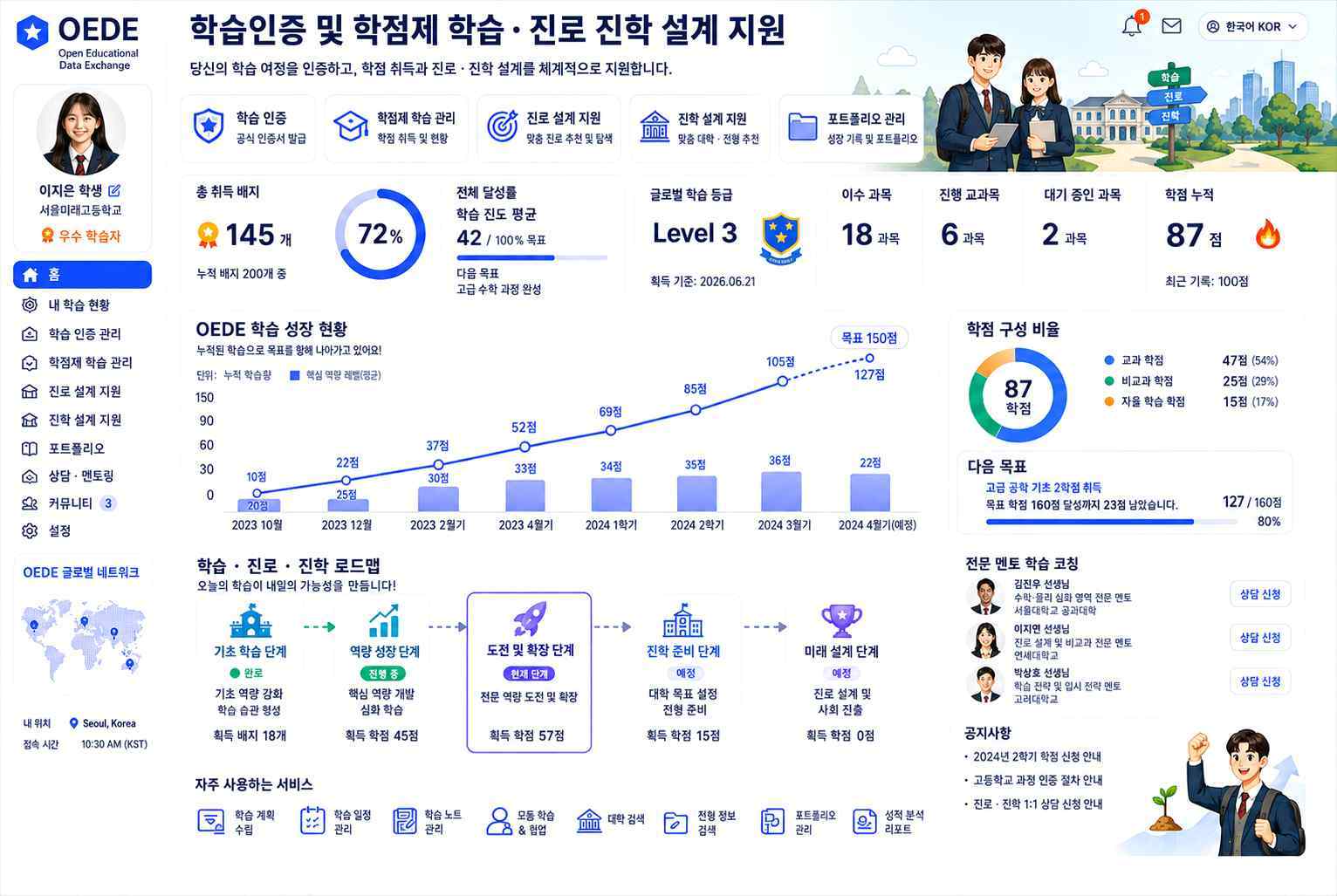
이러한 연결에는 지역별 협력 기관, 최신 안내의 관리 책임, 언어·문화 검토와 실제 지원 인력이 필요합니다. 아래 원고의 화면은 확장 방향을 보여주는 개념 예시이며, 현재 제공되는 상담 서비스나 확정된 혜택을 뜻하지 않습니다.These connections require local partners, maintained information, language and cultural review, and actual support staff. The manuscript screens below illustrate proposed extensions, not currently available services or confirmed benefits.
자기인식·AI 분석·교사 피드백의 비교Comparing self-perception, AI observations and teacher feedback
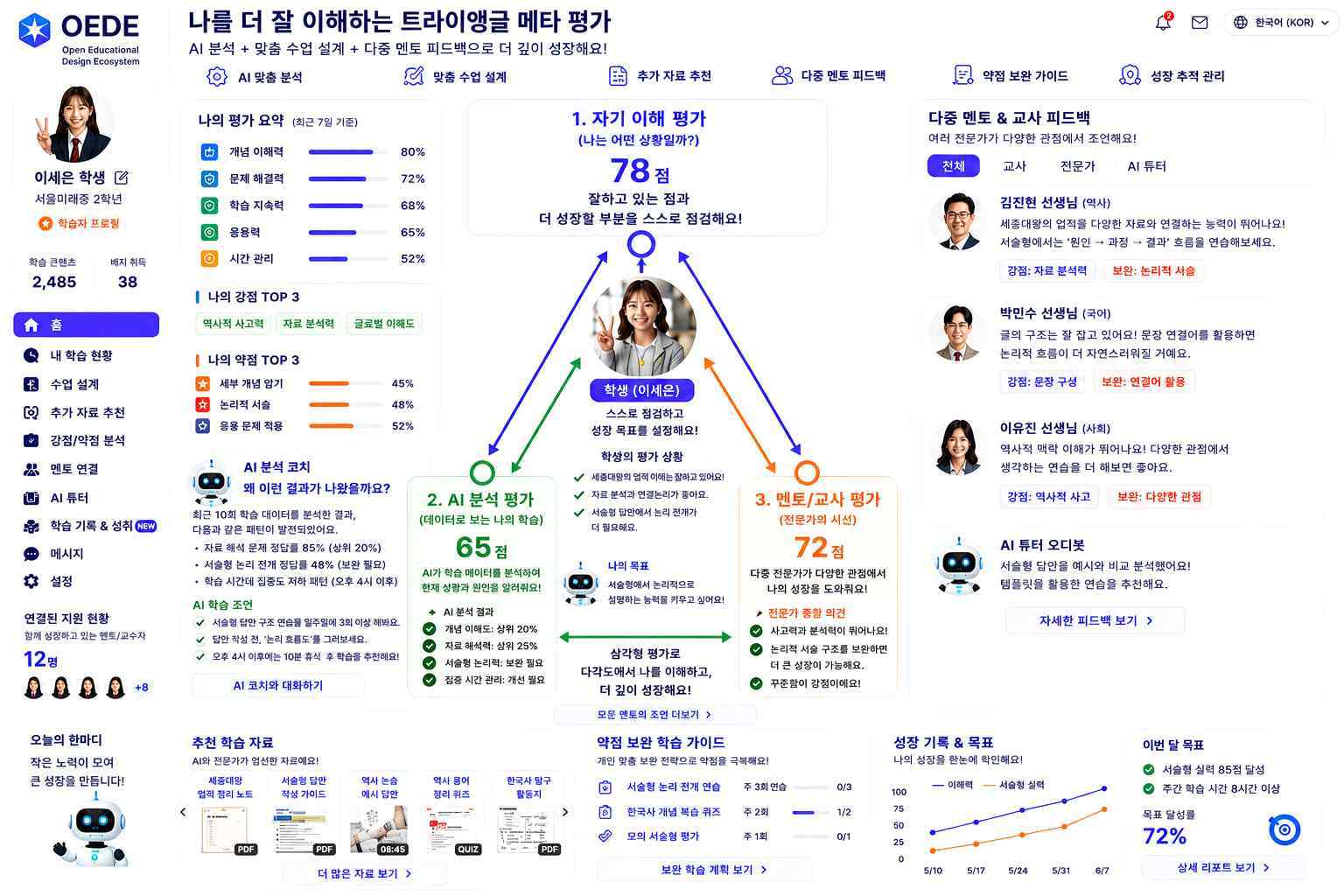
무엇을 보여주는가 학생이 느끼는 이해 수준, 기록에 근거한 AI 관찰, 교사·멘토의 판단을 나란히 비교합니다. 차이를 하나의 점수로 확정하기보다 그 이유를 성찰하는 구조입니다.The screen compares learner self-perception, data-based AI observations and professional feedback, using differences as prompts for reflection.
활용 장면 학생은 개념을 안다고 느끼지만 풀이 과정에서 설명이 빠질 수 있습니다. 교사는 수행 장면을 검토하고, 학생과 함께 부족한 설명을 보완할 활동을 선택합니다.A learner may feel confident while omitting reasoning in a solution. Teacher review helps identify an activity to improve that reasoning.
구현 조건 AI 분석에는 사용한 정보와 불확실성을 표시하고, 학생이 분석을 질문·거부·수정할 수 있어야 합니다. 최종 학습 목표와 지원 결정에는 학생과 교육자의 판단을 반영합니다.AI outputs should disclose evidence and uncertainty and allow questioning or rejection. Learners and educators decide learning goals and support.
이동 이후에도 이어지는 학습 관계Maintaining learning connections across moves
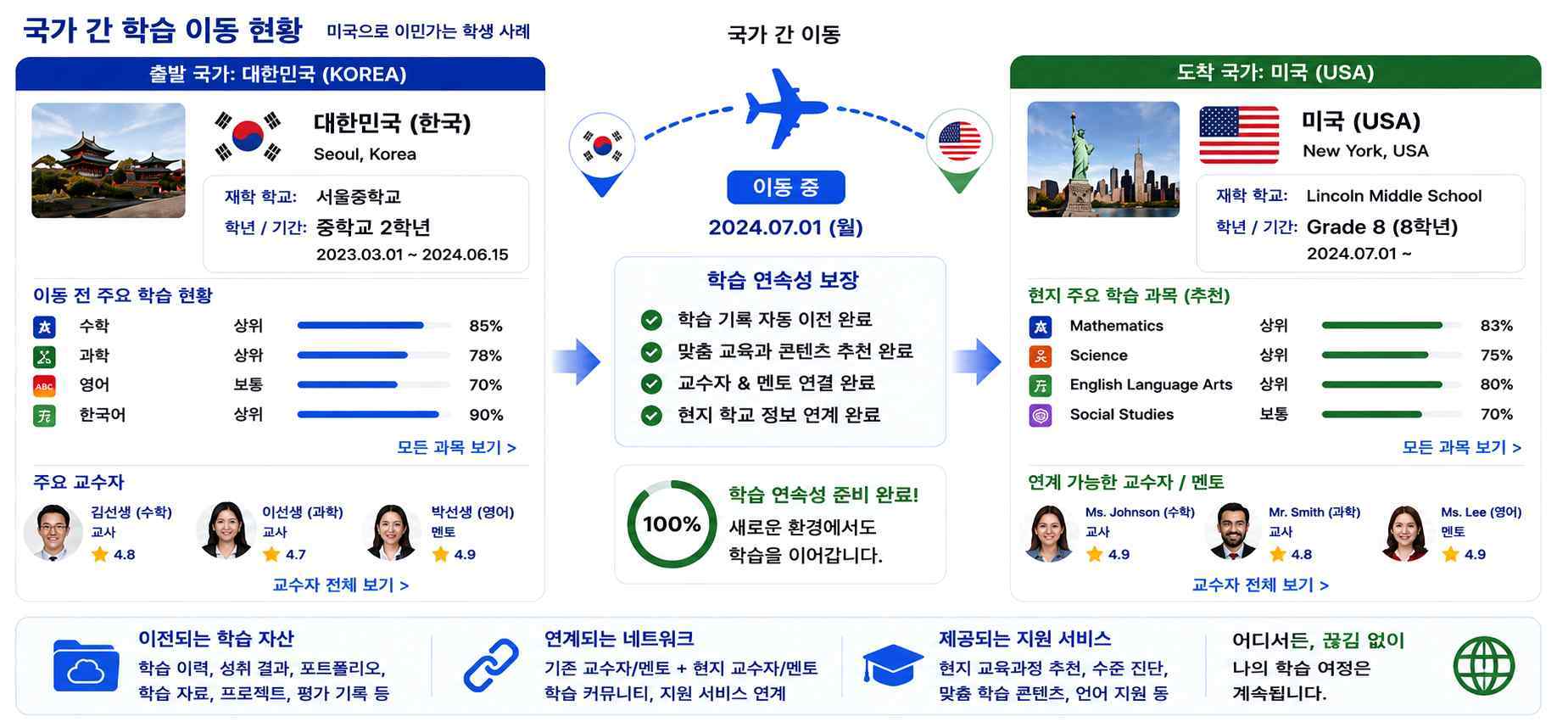
무엇을 보여주는가 학습자가 다른 국가로 이동할 때 이전의 자료·경험·교사 관계와 새 교육환경을 연결하는 장면입니다. 화면의 자동 이전이나 연속성 수치는 개념 표현이며 보장된 기능이 아닙니다.This scenario links prior resources, experiences and support relationships to a new national context. Depicted automatic transfer and continuity metrics are conceptual.
활용 장면 전학·이주 학생의 이전 학습 경험을 새 교사가 이해하고, 현지 교육과정에 맞는 보충 자료와 언어 지원을 연결하는 과정을 구상합니다.A new teacher interprets a moving learner’s prior experience and connects curriculum-relevant resources and language support.
구현 조건 교육과정 대응 관계, 번역·문화 검토, 정보 전달의 동의와 접근권한을 확인해야 합니다. 공식 학적·학점 인정은 해당 국가와 기관의 절차를 따릅니다.Curriculum mapping, translation, cultural review, consent and permissions are needed. Official recognition follows the receiving institution’s rules.
다국어 교육·복지 정보로 이어지는 접근 창구A multilingual entry point to education and support
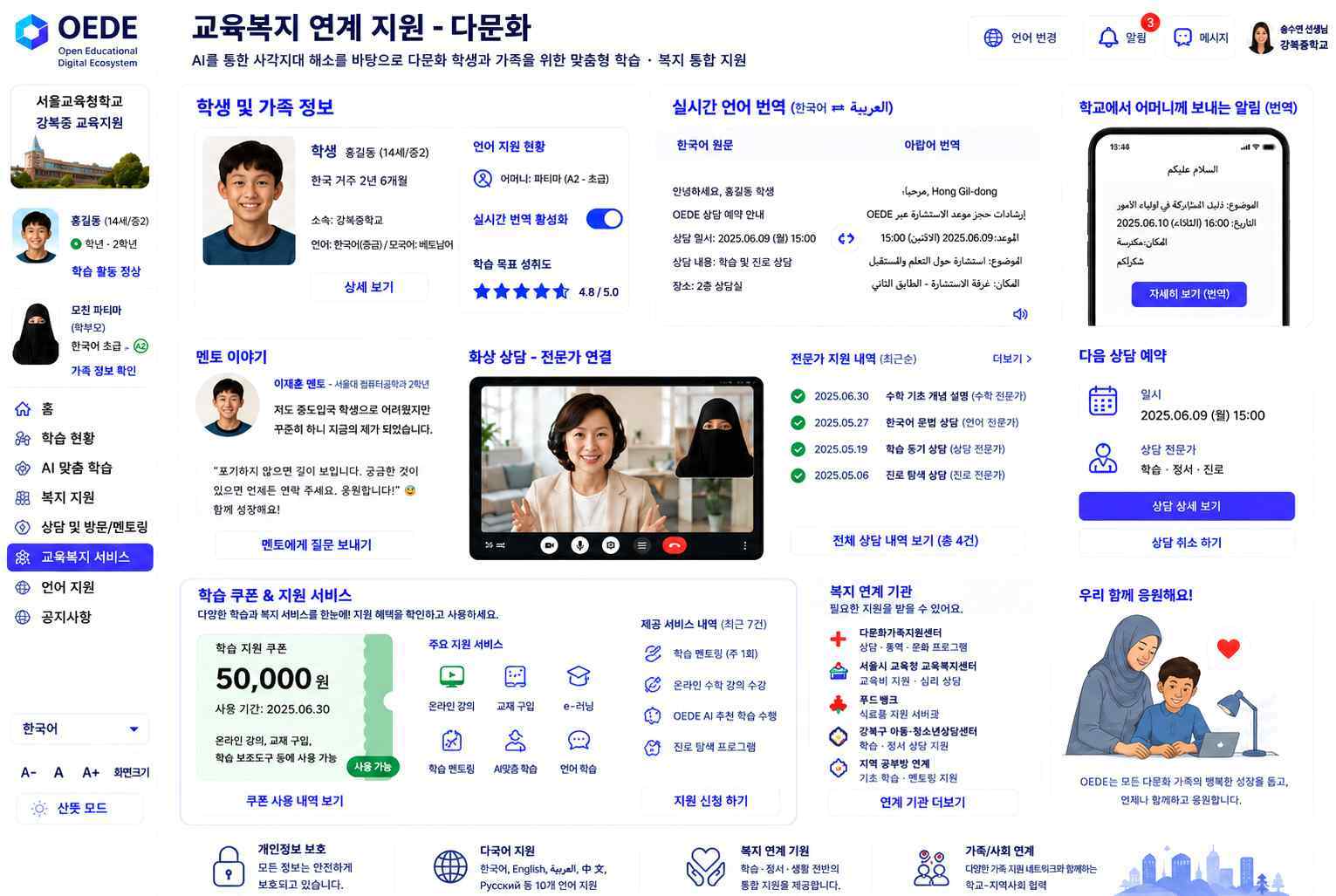
무엇을 보여주는가 언어 장벽이 있는 학생과 보호자가 필요한 교육·상담·지역 서비스를 찾고 담당자에게 연결되는 모습을 설명합니다. 자료 연결의 범위를 교육 지원 관계로 넓히는 구상입니다.The screen illustrates connecting learners and families facing language barriers to appropriate education, counseling and local services.
활용 장면 보호자가 학교 안내를 이해하기 어려울 때 선호 언어로 문의하고, 담당 교사나 통역 지원 기관에 연결됩니다. 중요한 내용은 전문 인력이 검토합니다.A family asks a question in its preferred language and is connected to school staff or interpretation support, with professional review for important matters.
구현 조건 실제 기관 협약, 담당 인력, 통역 검토와 최소 정보 전달 기준이 필요합니다. 이미지에 나온 지원금 액수·상담 일정·기관 연결은 현재 제공되는 혜택으로 해석하지 않습니다.Institutional agreements, staffing, interpretation review and minimum data sharing are required. Displayed funding, schedules and referrals are fictional.
학습 경험과 진로·진학 계획의 연결Connecting learning experience with educational and career planning
무엇을 보여주는가 교과 이수, 프로젝트, 성찰과 포트폴리오를 함께 보면서 다음 학습을 계획하는 화면입니다. 학습자가 쌓은 경험과 공식 기관의 이수 정보를 구분하여 연결합니다.The screen brings course completion, projects, reflection and portfolios together for planning, distinguishing learner experience from official records.
활용 장면 학생과 진로 담당 교사가 관심 분야, 이수 과목과 탐구 결과를 검토하고 다음 학기의 과목·활동을 선택합니다. 추천은 선택지를 비교하는 보조 정보로 사용합니다.A learner and counselor review interests, courses and inquiry work to plan future subjects and activities, using recommendations as supporting information.
구현 조건 최신 교육과정·이수 요건과 담당자의 검토가 필요합니다. 플랫폼의 활동 기록이나 배지는 공식 학점·자격을 대신하지 않으며, 합격 가능성을 보장하지 않습니다.Current course requirements and counselor review are needed. Platform activity records or badges do not replace official credit or guarantee admissions.
07
누가 연결하고 관리할까Who connects and maintains the support?
교육자 · 기여자Educators and contributors
설계 맥락과 활용 경험을 기록하고 권리 범위를 확인합니다.Document design context, use and permissions.
학교 · 교육행정Schools and administration
선정 절차, 정보 보호, 접근성, 운영 책임과 시범 범위를 정합니다.Establish selection, data protection, accessibility, accountability and pilot scope.
출판사 · 플랫폼Publishers and platforms
기존 자료의 위치와 권리를 유지하면서 허용된 연결 방식을 협의합니다.Agree on permitted connections while retaining ownership and resource locations.
대학 · 연구기관Universities and researchers
모형 타당성, 사용성, 연결·재사용 과정과 교육적 효과를 검토합니다.Evaluate validity, usability, reuse processes and educational outcomes.
자료의 주제·언어·출처를 같은 양식으로 기록하고, 연결 주소와 이용 권한을 관리해야 합니다. 학습자가 자신의 기록을 가져갈 수 있도록 내보내기 형식도 정합니다. 학습기록의 기관·국가 간 연결은 별도 동의·법적 검토가 선행되어야 합니다.Use a shared format for topics, languages and sources, maintain links and permissions, and define export formats so that learners can take their records with them. Cross-institutional or cross-border learning records require separate consent and legal review.
지역의 연결은 지역의 파트너와 함께 만듭니다. 학교·교육청·지역 학습지원 기관·상담 및 통역 기관이 제공 가능한 범위와 담당자를 명확히 합니다. 플랫폼은 안내를 연결하고 갱신 상태를 표시하며, 중요한 행정·상담 판단은 현지 담당자가 확인하도록 운영 책임을 나눕니다.Local connections need local partners. Schools, education authorities, learning-support organizations, counselors and interpretation services define their scope and contacts. The platform connects guidance and shows its currency; local staff confirm important administrative and counseling decisions.
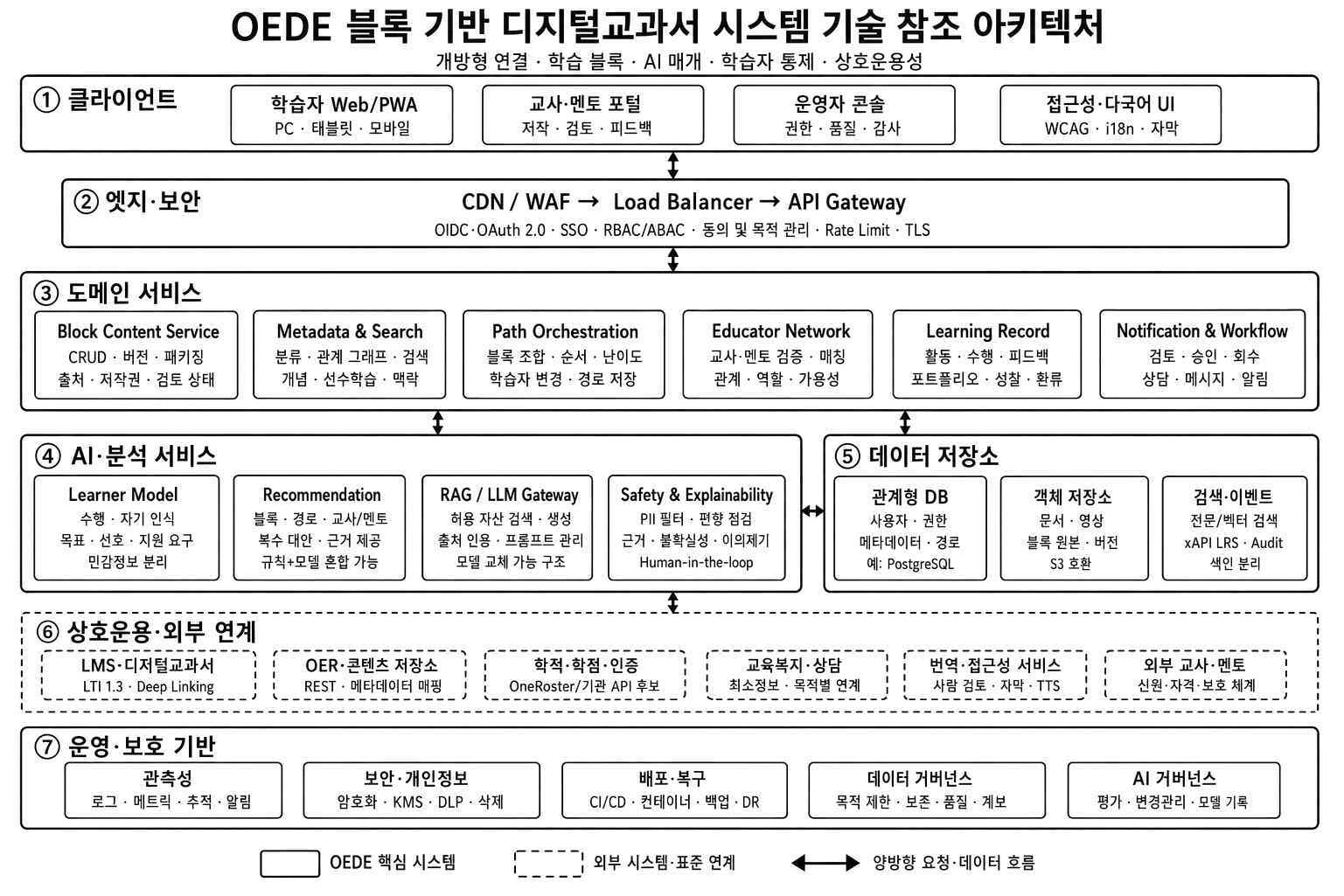
운영과 보호를 포함한 기술 참조 구조A technical reference covering operation and safeguards
무엇을 보여주는가 자료 연결뿐 아니라 권한·동의·보안·검색·학습기록·운영 복구가 함께 필요함을 보여줍니다. 도식의 서비스와 기술명은 구현을 검토하기 위한 후보입니다.The reference includes permissions, consent, security, search, records and recovery alongside resource linking. Named technologies are candidates for evaluation.
활용 장면 처음에는 한 주제의 자료를 찾고, 출처와 검토 내용을 확인하는 기능부터 만듭니다. 학생과 교육자가 실제로 필요로 하는 도움을 확인한 뒤, 번역·질문·상담 같은 외부 서비스와 AI 추천을 하나씩 연결할 수 있습니다.Start with finding resources for one topic and checking their sources and review notes. Then connect translation, questions, counseling and AI recommendations one at a time, based on learners’ and educators’ needs and agreements with providers.
구현 조건 운영 주체와 책임을 정하고 필요한 기능부터 구현해야 합니다. 도식의 데이터베이스·표준·AI 기술은 선택 가능한 구현 방법을 설명하며, 현재 사이트에 모두 적용되었다는 뜻은 아닙니다.Define operating responsibility and prioritize needed functions. The named databases, standards and AI technologies illustrate implementation options; they are not all deployed on the current site.
근거 확인: 법령 원문·교육부 선정기준·관련 보도 보기Review legislation, selection guidance and related news below.
08
한 지역에서 확인하고 함께 넓히기Try it locally and develop it together
1 · 학생 화면 고도화Refine the learner journey
2 · 지역 연결 시범Pilot local support
3 · 다국어·이동 시범Test language and mobility
4 · 제도 연계 검토Evaluate formal-system links
교과서 플러스의 학습 흐름부터 고도화합니다. 단원 하나에서 설명·활동·도움 요청이 어떻게 이어지는지 관찰하고, 블록이 내부에서 작동하더라도 학생에게 선택 이유와 출처가 잘 보이는지 확인합니다.Begin with a Textbook Plus unit: observe explanations, activities and help requests, and test whether sources and choices remain clear when blocks operate behind the scenes.
협력 가능한 지역 한 곳에서 연결을 검증합니다. 실제 제공 가능한 학습자료와 기관 안내부터 연결하고, 담당자·업데이트 주기·응답 범위를 확인합니다. 교사와 학습자가 활용 경험을 다시 남기도록 합니다.Work with one local partner network, connect resources and verified services, define ownership and maintenance, and capture teacher and learner experience.
다른 언어·지역으로 이동하는 학습을 시험합니다. 동일한 화면 형식에 교육과정과 지역 정보가 바뀌는지, 학습이 어디서 끊기는지 확인합니다. 저속 연결과 오프라인 접근도 함께 평가합니다.Test a move across languages or regions: adapt curricula and local context within the same interface and identify breaks in continuity, including under low connectivity.
학점제와 기관 간 연계를 단계적으로 검토합니다. 학습 기록의 설명력과 교육자의 검토 과정을 먼저 확인한 뒤, 참여 기관과 인정 범위·정보 전달 규칙을 협의합니다.Assess the meaning of learning records and educator review before agreeing with participating institutions on any formal recognition and information-sharing arrangements.
성공의 기준은 자료 수나 가입자 수만이 아닙니다. 학생이 필요한 배움을 찾는 데 걸리는 시간, 이동 후 학습을 다시 시작하는 과정, 실제 도움으로 이어진 연결을 살펴봅니다. 이해와 참여, 교사의 준비 부담, 번역의 정확성, 연결 정보의 최신성, 운영 비용을 함께 확인해 확대 여부를 판단합니다.Success is not measured only by resource or account counts. Evaluate the time needed to find useful learning, the process of resuming after a move and whether connections lead to actual help. Learning, participation, teacher workload, translation, information currency and operating cost inform decisions to expand.
우리가 만든 학습의 형식을, 세계가 함께 발전시키고 사용할 수 있도록.A learning format that the world can use and develop together.
OEDE는 이미 있는 좋은 자료와 사람의 경험이 필요한 곳으로 이어지고, 활용 경험이 다시 쌓여 공유되는 기반을 지향합니다. 학습자가 어디에 있든 다음 배움과 도움을 찾을 수 있게 하는 것—그 공통의 목적에서 출발하여, 작은 연결을 검증하고 지속 가능한 국제적 협력으로 넓혀 갑니다.OEDE aims to connect existing resources and human experience where they are needed, and preserve new experience for others to use. The shared purpose is to help learners find their next learning opportunity and the support they need, wherever they are. It starts with testable connections and grows through sustainable international cooperation.
본 문서는 제공된 OEDE 원고와 교과서 플러스 프로토타입을 바탕으로 정리한 개념·실행 기획입니다. 도판의 가상 화면과 제안된 연결 기능은 운영 실적이나 효과 검증 결과와 구분합니다.This concept and implementation proposal builds on the supplied OEDE manuscripts and the Textbook Plus prototype. Illustrative screens and proposed functions are distinguished from operational results and validated outcomes.
공개 자원과 국제 학습 연속성의 참고 근거References for open resources and international learning continuity
확인일: 2026.10.04 · 아래 자료는 설계 방향을 검토하는 참고 근거이며 OEDE와의 제휴를 의미하지 않습니다.Checked 4 October 2026. These sources inform the design direction and do not imply partnership with OEDE.
공개허가 교육자원의 재사용·공유, 포용적 품질, 지속 가능한 운영과 국제 협력의 방향을 참고했습니다.Reference for reuse and sharing of openly licensed resources, inclusive quality, sustainability and international cooperation.
연결이 부족한 환경에서 지역 허브와 간헐적 동기화를 활용하는 학습 지속 방식을 참고했습니다.Reference for continuing learning with local hubs and intermittent synchronization in low-connectivity settings.
미국·국제 적용 검토의 공식 출처와 열람 범위Official sources and review scope for international application
확인일: 2026.11.03. 아래는 해당 설명에 사용한 범위입니다. 검색 색인으로 확인한 자료와 본문·특정 쪽을 읽은 자료를 구분했습니다. 미국의 교육자료 선정 구조는 주 교육부·교육청의 공식 안내를 근거로 정리했습니다.Checked 3 November 2026. Review scopes distinguish indexed official excerpts from directly read pages or selected PDF passages. The account of U.S. materials selection is based on official state education guidance.
공식 HTML의 HQIM·Instructional Materials·Funding 항목 열람Official FAQ sections on materials and funding, updated 25 February 2025; check current conditions for procurement.
Responsibility for Education: Responsibility·Regional Differences; Elementary and Secondary Education: Government Role·Local Governance·Minority-Language Education. 현재 웹 본문 직접 확인. 페이지 전체의 통계 또는 고등교육 항목을 검증한 것은 아님.Responsibility and elementary/secondary governance sections; historical statistics are not used as current data.
[G2] · British Columbia Ministry of Education and Child Care
서문 중 교사의 자료 선택 역할; I(1–4), II(5–9), III(11–14) 웹 본문을 직접 확인. 특히 정의 1–2, 11(d), 12(h), 13(a–f).Preamble and sections I–II, III.11–14, especially 13(a–f); not a product endorsement.
[P1] · U.S. Department of Education, Student Privacy Policy Office/PTAC
서론, 적용시점, Action Step 7의 공립학교 LMS 사례, 계약·외주 책임 설명 열람Official first-steps guidance including school LMS examples; no OEDE compliance test performed.
법령·정부 자료·관련 뉴스Legislation, official guidance and related news
확인일: 2026.10.03 · 법령은 운영 요건의 근거, 정부 자료는 정책·선정 안내, 뉴스는 변화 과정의 참고 자료입니다. 각 제목을 누르면 원문이 새 창에서 열립니다.Checked 3 October 2026. Legislation supports requirements; official materials explain policy and selection; news provides historical context.
AI 교육자료의 학교 자율 선택·활용 지원 방향을 확인합니다. 계획은 사업 완료나 본 사이트의 정부 인증을 의미하지 않습니다.Policy direction for school choice of AI resources; not evidence of government approval of this platform.
법안 통과와 교과용 도서·교육 자료 구분에 관한 당시 보도입니다. 현행 요건은 법령 원문을 기준으로 확인합니다.Historical coverage of passage of the amendment; consult current legislation for operative requirements.
근거와 문서의 범위Sources and scope
기획 근거: 제공된 2026년 7월 3일 DOCX 원고와 7월 20일 PDF 수정본. 수정본의 분산성·연결·순환 관점을 우선 반영했습니다. 원고의 학술지·저자·DOI 표시는 확정된 출판 정보로 사용하지 않았습니다.
가능성과 기대 효과를 설명하는 문서입니다. 실증 결과와 확정된 법적 판단을 의미하지 않습니다.