등록 이전 학습 기획안LEARNING BEFORE ENROLLMENT · A CONCEPT PROPOSAL
배움은 등록보다 먼저 시작될 수 있습니다Learning can begin before enrollment
학교·과정에 등록하기 전의 과제와 피드백을 남겨, 학습자가 원할 때 기관의 검토로 이어 주는 방법을 제안합니다.A proposal to preserve work and feedback before school or course enrollment and connect them to institutional review when the learner chooses.
첨부 원고 기반 기획·검토 문서 · 2026.10.04 · 원고 버전 20260806-002Concept proposal based on the supplied manuscript · 4 October 2026 · Source version 20260806-002
공부하고 싶은 순간, 기관의 자료로 배움을 시작합니다Start learning with institutional resources when you are ready
배우고 싶은 학생이 학교·대학·도서관·교육기관의 사이트를 방문합니다. 관심 있는 주제와 자신의 수준에 맞는 자료를 고르고, 기관이 열어 둔 범위에서 공부를 시작합니다. 학교에 다니는 학생도, 학교 밖에서 배움을 찾는 학생도 참여할 수 있습니다. 정식 입학이나 수강 등록 이전에도 배움을 시작할 수 있는 여건을 마련하자는 기획입니다.Students visit a school, university, library or educational institution’s website, choose suitable resources and begin learning within the opportunities it makes available. The proposal supports students in and outside school, including those who have not yet formally enrolled.
공부하는 동안에는 설명을 읽고, 질문하고, 과제를 해 보고, 받은 의견을 바탕으로 다시 생각합니다. 필요하면 AI가 번역과 쉬운 설명, 초기 피드백을 돕고, 교사나 기관의 지원으로 연결할 수 있습니다. 학생은 초안과 수정본, 피드백 가운데 보관할 자료를 선택해 자신의 배움을 쌓아 갑니다.Learners read, ask questions, try tasks and revise their understanding with feedback. AI may assist translation, accessible explanations and initial feedback, alongside support from educators. Learners choose which drafts, revisions and feedback to keep.
이렇게 남긴 과정은 다음 배움의 출발점이 될 수 있습니다. 학생이 원할 때 본인 확인과 동의를 거쳐 선택한 자료를 기관에 제출하면, 기관은 기록과 필요한 추가 평가를 살펴 이미 배운 내용과 더 필요한 도움, 다음 과정을 판단합니다. 공부를 시작할 기회와, 그 배움을 나중에 검토받을 기회를 연결하는 것입니다. 공식 인정 여부는 해당 기관의 기준과 절차에 따릅니다.Retained evidence can support the next learning step. When ready, learners verify their identity and consent to submit selected records. Institutions review the evidence and any additional assessment to determine learning, support needs and next steps. Formal recognition follows their own rules.
자료를 만나고 → 공부를 시작하고 → 과정을 남기고 → 다음 교육적 기회로 연결합니다.Find resources → begin learning → retain the process → connect to further educational opportunities.
기관이 가진 자료가 학생의 실제 배움으로 이어지도록, 접근과 학습 지원, 기록과 제출, 기관 검토를 하나의 이용 경험으로 설계합니다. 여러 기관의 자료와 서비스를 연결하면 국내외로 범위를 넓힐 수 있습니다. 처음에는 한 기관의 한 과목에서 학생과 검토자가 실제로 사용할 수 있는지 확인하며 시작할 수 있습니다.Connect access, learning support, records, submission and review in one experience. Resources and services from multiple institutions can extend its reach across countries. Start with one subject at one institution and expand through practical evaluation.
기획자와 제작자는 무엇을 만들면 될까요?What should planners and developers build?
학생에게는 ‘공부 시작’과 ‘내 학습 기록’이, 기관 담당자에게는 ‘제출 자료 검토’가 보이도록 구성합니다. 첫 활동은 간단하게 시작하고, 기록을 보관할 때는 임시 학습번호나 간편 계정을 사용할 수 있습니다. 제작자는 자료·과제 연결, 초안과 수정 이력 저장, 안전한 본인 계정 연결, 동의에 따른 선택 제출, 검토와 추가 과제 요청 기능을 이어서 만듭니다. 이러한 핵심 기능은 현재의 웹·앱과 데이터 저장 기술로 구현할 수 있습니다.Give learners a simple entry point and their learning records, and give institutional reviewers a submission interface. Implement resource-task links, version history, secure identity linkage, consent-based evidence selection and review requests using current web, app and data-storage technologies.
AI는 공부와 기록 정리를 돕는 연결 기능입니다. 설명을 번역하고 피드백이나 학습 요약을 제공하도록 붙일 수 있습니다. 요약에서는 원래 과제와 수정본으로 돌아갈 수 있게 하고, 교육자가 내용을 확인·수정할 수 있도록 합니다. 자료와 AI 서비스를 연결하는 API는 서로 다른 기능이 자료를 주고받는 연결 통로로 이해하면 됩니다. 지원 기능을 추가하거나 바꾸어도 학생의 학습 기록은 유지되도록 설계합니다.AI assists translation, feedback and summaries, with links to original evidence and educator review. APIs connect resources and support services. Keep learner records intact when services are added or replaced.
디지털 확인서는 기관이 확인한 결과를 전달하는 방법입니다. 기관이 학습 확인서를 발급하면, 받는 쪽에서 발급처와 내용의 변경 여부를 확인할 수 있게 합니다. W3C의 디지털 증명 표준은 이런 확인서를 서로 주고받기 위한 공통 형식입니다. 처음에는 발급 기관의 확인 페이지를 마련하고, 외부 기관과의 교환이 필요해지면 전자서명과 공통 형식을 적용할 수 있습니다. 블록체인은 필수 조건이 아닙니다. 확인서의 진위를 확인하는 일과 다른 기관이 이수·학점으로 인정하는 일은 별도입니다.Digital statements let recipients check the issuer and whether issued content has changed. W3C Verifiable Credentials provide a common exchange model. Begin with an issuer verification page and add digital signatures and interoperable formats as needed. Blockchain is optional; verification is separate from credit recognition.
배움은 이미 시작되고 있습니다Learning is already taking place
입학이나 전학 절차를 기다리는 동안에도 읽고 질문하며 배울 수 있습니다. 이미 학교에 다니는 학생도 정식으로 등록하지 않은 과정이나 교실 밖 탐구에서 새로운 것을 익힙니다. 학교나 과목의 등록 절차가 아직 끝나지 않았다는 이유만으로, 그동안의 노력과 배운 내용을 설명할 자료까지 사라질 필요는 없습니다.
이 기획은 먼저 시작한 학습의 과정을 남겨 두고, 필요할 때 기관이 살펴볼 수 있도록 이어 주는 방법을 제안합니다. 임시 학습번호로 과제와 피드백, 수정 이력을 보관하고 학습자가 고른 자료를 동의와 본인 확인을 거쳐 전달하는 방향입니다. 기술은 그 증거를 보존하고 정리하며, 공식 인정은 권한 있는 기관이 판단합니다. 기록이 있다는 사실과 학점이나 자격을 인정받는 일은 구분합니다.
먼저 교과와 협력 기관을 정해 작게 시험하면서, 학생이 기록과 동의를 이해하는지, 필요한 자료를 고르고 공정하게 검토받을 수 있는지 확인하려 합니다. 그 결과를 바탕으로 재학생의 학교 밖 학습부터 이주·재난·복귀 과정까지 적용 가능성을 살펴볼 수 있습니다. 오늘의 학습이 기존 학교와 교육체계에서 다음 배움으로 이어질 여지를 남기는 것이 목적입니다.
기존과 무엇이 다른가요?What is different?
이미 끝난 학습을 나중에 설명하는 절차에 앞서, 등록 전에 새로 배우는 동안 초안·피드백·수정을 선별해 남기도록 제안합니다. 학습자는 제출할 자료를 고르고 본인 연결에 동의하며, 기술은 증거와 맥락을 보존하고 권한 있는 기관은 기준에 따라 인정 여부를 판단합니다.Before a later process asks learners to reconstruct past learning, this proposal retains selected drafts, feedback and revisions as new pre-enrollment learning happens. Learners choose evidence and consent to identity linkage; technology preserves context, while authorized institutions apply their criteria and decide recognition.
그래서 어떤 도움이 되나요?Who benefits, and how?
학습자
학습자는 입학·전학을 기다리는 동안뿐 아니라 재학 중 정식 수강하지 않은 과정에서도 과제와 수정 과정을 남겨, 나중에 배움을 설명할 근거를 확보할 수 있습니다.Learners awaiting admission or transfer, as well as enrolled students learning outside courses they have formally registered for, could retain work and revisions to explain their learning later.
교사·검토자
교사와 검토자는 피드백·수정·도움의 조건을 결과물과 함께 살펴, 학생의 이해와 추가 확인이 필요한 부분을 구분할 수 있습니다.Teachers and reviewers could examine feedback, revisions and assistance alongside the final product to distinguish demonstrated understanding from what needs further review.
학교·인정 기관
학교와 인정 기관은 선택된 증거를 기존 기준에 맞춰 살펴, 진입·복귀·전학에 필요한 설명과 추가 평가를 검토할 수 있습니다.Schools and recognition bodies could assess selected evidence against existing criteria and consider explanations or further assessment needed for entry, re-entry or transfer.
English
Learning can continue while admission or transfer is pending. Students already enrolled in school also learn through courses they have not formally joined and inquiry beyond the classroom. Unfinished institutional or course enrollment need not mean losing evidence that could later explain the effort and learning that took place.
The proposal preserves the process of learning that begins before enrollment so an institution may later consider it. A temporary learning identifier would retain work, feedback and revisions, with learner-selected material transferred through consent and identity verification. Technology preserves and organizes evidence; an authorized institution decides formal recognition. Having a record is distinct from receiving credit or a qualification.
A small pilot with selected subjects and a partner institution would examine whether learners understand records and consent, can select relevant material and have it reviewed fairly. Findings could inform uses from enrolled students’ learning outside school to migration, disaster and re-entry. The purpose is to preserve a path from today’s learning to further learning within existing schools and education systems.
01
등록을 기다리는 동안에도 배움은 이어집니다Keep learning while enrollment is pending
누군가는 입학이나 전학을 기다리며 책을 읽고 문제를 풉니다. 이미 학교에 다니는 학생도 정식으로 수강하지 않은 온라인 강좌나 학교 밖 프로젝트를 통해 배울 수 있습니다. 첨부 원고는 공식 등록이 아직 이루어지지 않았다는 이유만으로, 그동안의 배움까지 없었던 일이 될 필요는 없다는 문제의식에서 출발합니다.Someone awaiting admission or transfer may read and solve problems. Enrolled students also learn through online courses they have not formally registered for and projects outside school. The manuscript begins from the proposition that a lack of formal enrollment need not erase learning that has already occurred.
이 문서에서 등록은 학교 입학·학적 등록·복귀·과목 수강 등 공식 교육절차를 뜻합니다. 단순한 웹사이트 회원가입만을 가리키는 것은 아닙니다. 초기 학습 접근과 공식 인정은 목적이 다르므로, 학교가 출결·성적·학적을 관리할 때 필요한 확인 절차를 첫 활동 이전부터 모두 같은 수준으로 요구해야 하는지 묻습니다.Here, enrollment refers to formal educational procedures such as admission, institutional registration, re-entry and course enrollment, rather than merely creating a website account. Initial learning access and formal recognition serve different purposes; the question is whether checks needed for official attendance, grades and records must all precede the first learning activity.
등록은 배움을 시작시키는 유일한 조건이 아니라, 배움에 제도적 지위를 부여하는 절차일 수 있습니다.Enrollment can give learning institutional status without being its only possible starting point.
초기 접근은 쉽게, 공식 판단은 책임 있게—원고는 두 단계를 구분합니다. 학습을 먼저 시작하도록 하되, 인정이 필요한 시점에는 본인 확인과 저작성 검토, 교육적 평가, 기관의 기준 적용을 거치도록 제안합니다.The proposal separates accessible entry from accountable recognition. Learning may begin first; when formal recognition is sought, identity, authorship, educational quality and institutional requirements still need review.
대상은 등록이나 복귀에 어려움을 겪는 사람에 한정되지 않습니다. 재학생의 추가 학습, 학교 밖 청소년의 재시작, 이주와 행정 지연, 재난으로 생긴 공백 등에도 적용 가능성을 검토할 수 있습니다. 다만 학습 참여나 플랫폼 이용만으로 이수·학년·학점·자격이 확정되는 구조는 아닙니다.Potential uses include enrolled students’ additional learning, out-of-school learners, migration, administrative delays and disaster-related interruptions. Participation or platform use alone does not establish course completion, grade placement, credit or qualifications.
02
기존 인정 제도에 무엇을 더할까What can this add to existing recognition pathways?
원고는 국제기구의 문서와 관련 연구를 비교하여, 기존 접근이 어떤 구간을 다루는지 살펴봅니다. 새 기획은 이미 존재하는 제도를 대체하기보다 등록 전에 새롭게 이루어지는 학습부터, 나중의 검토까지 이어지는 구간을 보완하려는 제안입니다.The manuscript compares institutional documents and related studies to identify which parts of the process existing approaches address. The proposal complements them by considering how newly occurring pre-enrollment learning might connect to later review.
서류가 충분하지 않은 경우 자격과 교육 이력을 구조적으로 검토Assess qualifications and educational history when documentation is incomplete.
평가된 자격 프로필과 최종 인정은 구분됩니다. 새 학습의 증거를 만드는 일과도 목적이 다릅니다.An assessed profile is separate from recognition and differs from forming evidence of new learning.
발급된 기록의 기술적 확인과 전달Enable technical verification and transfer of issued records.
기록의 무결성과 이동성을 지원하며, 학습의 질이나 저작성을 스스로 결정하지 않습니다.They support integrity and portability, not an independent judgment of authorship or educational quality.
예를 들어 자격 관련 서류가 부족할 때 인터뷰와 대체 자료를 활용하는 접근은 참고가 됩니다. 그러나 고등교육 자격의 인정에 관한 틀을 초·중등학교에 그대로 옮길 수는 없습니다. 대상 기관과 교육과정, 검토 권한을 정한 후 적용 가능성을 살펴보아야 합니다.Interviews and alternative evidence used when qualification documents are incomplete offer useful references. Frameworks for higher-education qualifications, however, cannot simply be transferred to compulsory schooling; the receiving institution, curriculum and authority require separate consideration.
새로운 기술의 발명보다, 기존 요소를 연결하는 순서가 핵심입니다. 임시 식별자, 포트폴리오, 인터뷰, 전자서명 등은 이미 알려진 요소입니다. 원고의 제안은 이를 학습 시작 → 증거 형성 → 선택·동의 → 검토 → 공식 판단으로 배열하는 데 있습니다.The contribution is a proposed sequence, not a claim to invent temporary identifiers, portfolios, interviews or digital signatures: begin learning, form evidence, select and consent, undergo review, and receive an institutional decision.
03
나중에 설명할 수 있도록 과정을 남기기Keep the process so learning can be explained later
완성된 결과물만으로는 학생이 어떤 생각을 바꾸었는지, 어디에서 도움을 받았는지, 무엇을 스스로 설명할 수 있는지 알기 어렵습니다. 원고는 시도·피드백·수정·성찰을 학습 중에 선별하여 남기는 방식을 제안합니다. 나중에 기억을 되살리는 데만 의존하지 않고, 당시의 맥락을 함께 검토할 수 있게 하려는 것입니다.A final product may not show how a learner’s thinking changed, what help was received or what they can explain independently. The proposal selectively retains attempts, feedback, revisions and reflection during learning so that later review can consider the original context.
무엇을 만들었나The work
과제, 글, 풀이, 발표, 프로젝트 등 목표와 관련된 대표 결과물을 남깁니다.Retain representative tasks, writing, solutions, presentations or projects relevant to the learning aim.
어떻게 바뀌었나The process
초안과 피드백, 수정한 부분, 수정 이유를 연결해 이해가 어떻게 발전했는지 살펴봅니다.Connect drafts, feedback, revisions and reasons for change to examine developing understanding.
어떤 조건에서 했나The conditions
출처·시점·허용된 도움·실제 AI 활용·관찰이나 평가 기준을 필요한 범위에서 기록합니다.Record relevant sources, timing, permitted help, actual AI use and observation or assessment criteria.
무엇을 설명할 수 있나The demonstration
자기 설명, 관련 문제, 짧은 구술 또는 수행을 통해 이해와 적용을 확인할 수 있도록 합니다.Use explanation, related tasks, a short oral account or performance to support review of understanding and application.
기록이 많을수록 더 많이 배운 것은 아닙니다. 접속 시간과 클릭 수는 참여의 흔적일 수 있지만 역량 자체는 아닙니다. 종이나 낮은 사양의 기기로 공부한 학생이 남기는 디지털 흔적이 적더라도, 학습의 깊이가 얕다고 판단해서는 안 됩니다. 적지만 대표성 있는 증거부터 살펴보는 것이 원고의 방향입니다.More records do not necessarily mean more learning. Time online and clicks may describe participation, not competence. A learner working on paper or a low-specification device may leave fewer digital traces without learning less. The manuscript favors a small, representative body of evidence.
원고가 제안하는 ‘학습 중 증거 형성’은 설계를 위한 개념이며 확립된 국제 표준 명칭으로 제시되지 않습니다. 증거를 남겼다는 사실만으로 진실성·저작성·교육적 가치가 확정되지 않으며, 이후의 검토를 가능하게 하는 자료로 다룹니다.The manuscript’s idea of prospective evidence formation is a design proposition, not an established international standard. Preserving a record does not by itself establish its accuracy, authorship or educational value; it keeps material available for later consideration.
04
학습 기록을 기관 검토로 잇는 순서Connect learning records to institutional review
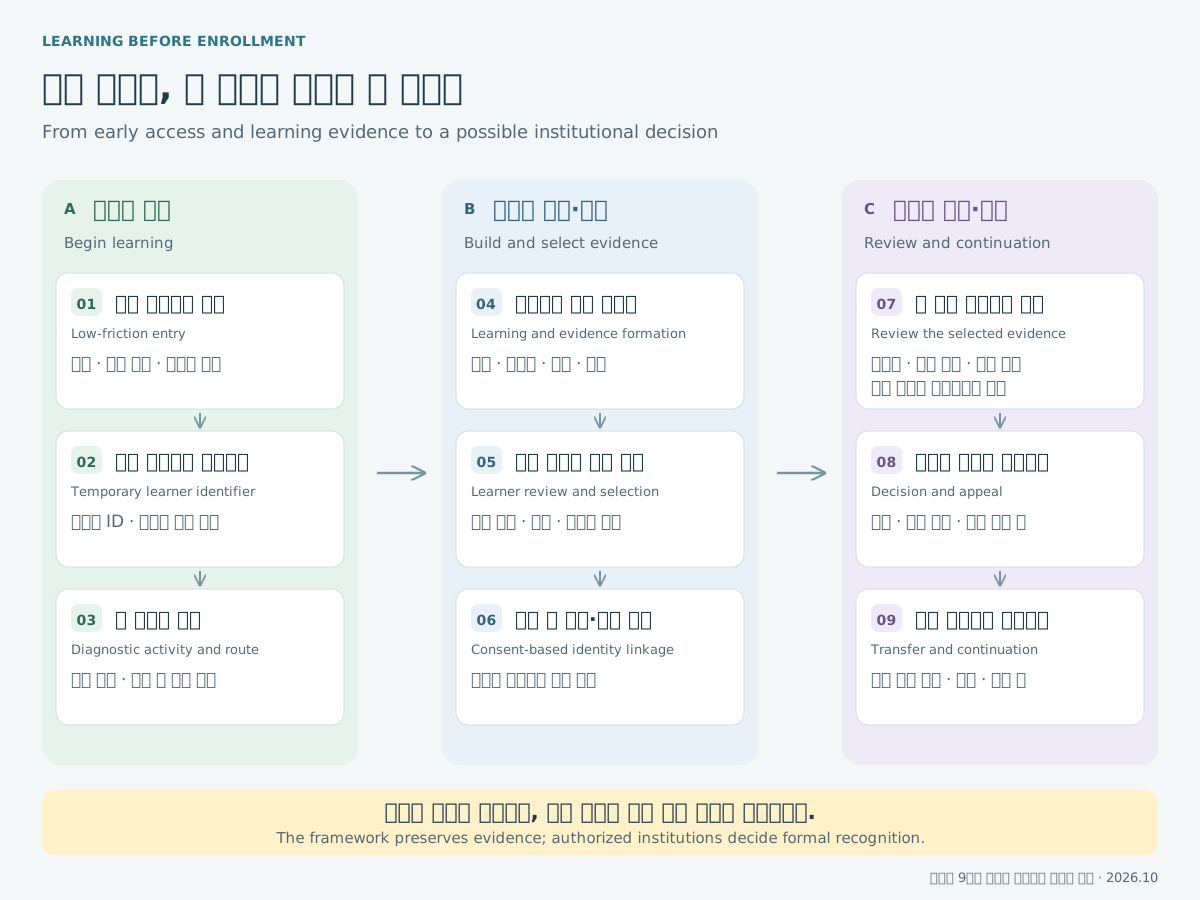
학생에게는 배움을 이어 가는 단순한 흐름을 제공합니다. 기관은 각 단계의 목적에 따라 확인 수준과 책임을 나눕니다. 처음부터 모든 신원 정보를 요구하는 대신, 필요한 판단이 생기는 시점에 필요한 확인을 더하는 방식입니다.The learner follows a simple learning journey while institutions assign checks and responsibilities according to each stage’s purpose. Verification is strengthened when a consequential decision requires it, rather than demanding all identity information at the outset.
필요한 도움부터 묻기Ask what support is needed
선호 언어, 대략적인 학습 단계, 기기·접속 환경과 접근성 요구를 확인합니다. 첫 활동과 무관한 민감한 정보는 기본 입력으로 두지 않습니다.Ask about language, approximate learning stage, device and connectivity, and accessibility needs. Sensitive information unrelated to the first activity is not part of the default entry.
임시 식별자로 이어 가기Maintain a temporary identifier
개인 특성에서 만들지 않은 임시 식별자로 기록을 연결합니다. 복구 코드나 안전한 연락 방법 등 회복 경로를 검토하고, 본인 연결 정보는 학습 증거와 분리합니다.A temporary identifier not derived from personal traits connects records. Consider recovery codes or safe contacts and keep identity-linking information separate from learning evidence.
적절한 출발점 찾기Find a starting point
짧은 과제나 대화로 시작 수준을 제안하되, 선발이나 확정된 학년 판정으로 쓰지 않습니다. 학생은 다른 수준을 시도하거나 추천을 바꿀 수 있습니다.Use a short task or conversation to suggest a starting point, not to select learners or assign an official grade level. The learner can try another level or change the recommendation.
학습·피드백·수정 남기기Retain learning, feedback and revision
설명과 활동을 이어 가며 필요한 결과물과 과정만 남깁니다. 허용된 도움과 실제 AI 활용, 수정 맥락을 함께 기록합니다.Continue instruction and activities while retaining relevant work and process, including permitted assistance, actual AI use and the context of revisions.
학습자가 검토하고 선택하기Let the learner review and select
기록을 이해할 수 있는 말로 보여 주고 오류를 고치게 합니다. 제출 목적에 맞는 자료를 골라 포트폴리오를 구성하며, 전체 이력을 일괄 전달하지 않습니다.Explain retained records, allow corrections and let the learner choose a portfolio relevant to the purpose rather than submitting an entire history.
동의 후 본인·기관 정보 연결하기Link identity and affiliation with consent
입학·복귀나 인정 요청이 가능해지면 필요한 확인 수준에 따라 임시 기록을 본인 정보와 연결합니다. 잘못 연결된 경우 검토하고 바로잡을 수 있도록 합니다.When entry, re-entry or recognition becomes possible, link the record to a verified identity at the required assurance level, with review and correction of mistaken links.
증거를 여러 관점에서 검토하기Review evidence from distinct perspectives
기록의 무결성, 누가 작성했는지, 학습의 질과 수준, 받는 기관의 교육과정과 맞는지를 각각 검토합니다. 필요하면 구술 설명이나 관련 과제를 더할 수 있습니다.Separately review integrity, authorship, educational quality and fit with the receiving curriculum. An oral explanation or related task may provide further evidence.
권한 있는 기관이 판단하기Receive an authorized decision
전부·일부 인정, 추가 평가나 학습 요청, 보류 또는 불인정이 가능합니다. 판단 근거와 남은 과제를 설명하고, 해당 절차에 따라 수정·재검토의 기회를 둡니다.An authorized body may grant full or partial recognition, request further assessment or learning, defer or decline. Explain the grounds and next steps, with correction or reconsideration under the applicable process.
기존 교육체계에서 계속 배우기Continue within existing education systems
승인된 결과와 최소한의 관련 기록을 기존 학적·학습 시스템으로 연결합니다. 인정되지 않은 자료도 동의한 범위에서 이후의 학습 출발점을 찾는 데 참고할 수 있습니다.Transfer approved results and the minimum relevant record to existing systems. With consent, unrecognized evidence may still inform subsequent learning.
이 경로의 목적은 심사를 건너뛰는 것이 아니라, 심사를 받을 자료를 잃지 않는 것입니다. 등록 이전에 학습할 기회를 열어 두면서, 이후의 판단은 기존 기관의 권한과 기준에 연결합니다.The route preserves material for review rather than bypassing review. It opens an opportunity to learn before enrollment while leaving later decisions with existing institutions and their criteria.
시작부터 공식 검토까지 아홉 단계Nine steps from early learning to institutional review
제공 원고의 Process 9단계와 Figure 1을 바탕으로 재구성한 설명용 도식 · 2026.10.04An explanatory diagram based on the manuscript’s nine process steps and Figure 1.이미지 크게 보기 / View full-size05
등록의 공백 속에서 이어 가는 공부Learning through gaps in enrollment
다음 장면은 원고가 다루는 적용 범위를 바탕으로 재구성한 설명용 예시입니다. 운영 실적이나 인정 결과를 보고하는 사례는 아닙니다. 학생의 이전 경험, 현재 필요, 연결하려는 기관을 먼저 확인해야 한다는 원칙은 모든 장면에 공통됩니다.The following illustrative situations are adapted from the manuscript’s scope, not reports of implementation or recognition outcomes. Each requires attention to prior experience, present needs and the intended receiving institution.
재학생의 학교 밖 탐구An enrolled student’s learning beyond school
수강 등록하지 않은 온라인 자료로 탐구한 학생이 질문, 초안, 받은 피드백과 수정 결과를 모읍니다. 이후 교사는 관련 과제나 설명을 통해 무엇을 이해했는지 살펴볼 수 있으며, 공식 이수 인정은 별도로 판단합니다.A student uses an online resource without enrolling in its course and retains questions, drafts, feedback and revisions. A teacher may later examine understanding through a related task or explanation; formal course recognition remains a separate decision.
이주·전학과 행정 지연Migration, transfer and administrative delay
입학이나 전학 절차를 기다리는 동안 언어와 기초학습을 이어 갑니다. 새 기관이 정해지면 학습자가 고른 증거를 필요한 확인과 함께 제출해 출발점이나 보충학습 검토에 활용할 수 있습니다.While awaiting admission or transfer, a learner continues language and foundational learning. Once a receiving institution is known, selected evidence can be submitted with the required checks to inform a starting point or additional learning.
재난·학교 폐쇄와 연결 불안정Disaster, school closure and limited connectivity
학교 이용이나 인터넷 연결이 어려울 때 지역 학습 공간, 저장된 자료, 종이 과제를 활용해 배움을 이어 갑니다. 나중에 연결된 기록에는 기기와 도움의 조건을 함께 설명하여 디지털 흔적의 양으로만 평가하지 않도록 합니다.A learner uses a local learning space, stored resources or paper tasks when school or internet access is interrupted. Later evidence explains device and assistance conditions so that the amount of digital activity does not stand in for learning.
학교 밖 학습자의 복귀An out-of-school learner’s return
복귀를 준비하는 학습자가 가능한 활동부터 시작하고 대표 결과물을 정리합니다. 상담자와 기관은 이 자료를 바탕으로 설명·수행을 더 확인하고, 필요한 학습이나 적절한 진입 경로를 검토할 수 있습니다.A learner preparing to return begins with accessible activities and gathers representative work. Support staff and a receiving institution can examine explanations or performance and consider further learning or an appropriate entry route.
이 경로는 학생을 학교 밖의 별도 체계에 계속 머무르게 하는 데 목적이 있지 않습니다. 기존 교육체계로의 진입·복귀·전학과 이후 학습을 돕는 연결을 지향합니다. 제출한 노력 모두가 학점이 된다고 약속하지 않으면서도, 오늘 시작한 배움을 다음 단계에서 설명할 기회를 남깁니다.The aim is a connection to entry, re-entry, transfer and continued learning within existing education systems. It does not promise that every effort becomes credit, but preserves an opportunity to explain today’s learning at a later stage.
06
기록은 학생이 고르고, 인정은 기관이Learners select evidence; institutions decide recognition
기록을 보관하는 서비스, 학습을 돕는 교육자, 증거를 살펴보는 검토자, 공식 결과를 결정하는 기관은 역할이 다릅니다. 증거의 존재와 공식 인정은 별도의 판단이며, 연결 플랫폼이 학교의 권한을 대신하지 않습니다.The service storing records, the educator supporting learning, the evidence reviewer and the institution issuing a formal decision have distinct roles. Evidence and formal recognition are separate judgments; a connecting platform does not replace institutional authority.
학습자 · 지원자Learners and support people
학습에 참여하고 기록을 확인·수정하며 제출 범위와 본인 연결을 선택합니다. 아동에게는 이해 가능한 설명을 제공하고, 보호자의 도움과 함께 학생 자신의 의견을 존중합니다.Participate, inspect and correct records, and choose submission and identity linkage. Give children understandable explanations and respect their views alongside appropriate guardian support.
교육자 · 학습 환경Educators and the learning environment
시작 활동, 설명, 피드백과 관찰을 제공하고 과제의 조건을 남깁니다. 진단은 학습을 돕는 용도로 사용하며 공식 인정 결과와 구분합니다.Provide activities, instruction, feedback and observation, retaining relevant task conditions. Formative diagnosis supports learning and is distinguished from official recognition.
증거 지원 기능 · 검토자Evidence support and reviewers
선택된 자료의 출처와 이력을 정리하고 무결성·저작성·교육적 수준을 검토합니다. 기술 검사 결과만으로 학습의 가치를 확정하지 않습니다.Organize selected evidence and provenance and examine integrity, authorship and educational level. Technical checks alone do not establish learning value.
권한 있는 기관Authorized institutions
목적지의 교육과정과 기준에 맞춰 증거를 해석하고 공식 인정과 후속 절차를 결정합니다. 결과의 이유와 필요한 다음 단계를 설명합니다.Map evidence to the receiving curriculum and requirements, make authorized decisions and explain the reasons and next steps.
접근의 문턱과 인정의 기준은 다르게 다룹니다.Accessible entry does not lower the standard of recognition
성적표가 없는 학습자는 포트폴리오, 인터뷰, 관찰된 수행이나 보충 과제로 설명할 수 있습니다. 증거를 보여 주는 방식이 달라져도 기대하는 학습 수준은 유지합니다. 언어, 장애, 문화적 표현 방식과 익숙하지 않은 평가 형식 때문에 실제 이해가 가려지지 않도록 다양한 응답 방식과 검토자의 준비가 필요합니다.A learner without a transcript may use a portfolio, interview, observed performance or supplementary task. The mode of evidence can change while the expected learning standard remains. Language, disability, cultural expression and unfamiliar assessment formats require accessible response options and reviewer preparation.
AI는 번역, 읽기 수준 조정, 초기 피드백과 증거 정리를 도울 수 있지만 학년·학점·자격이나 저작성을 독자적으로 판정하지 않습니다. AI 탐지 점수도 확정 판정이 될 수 없습니다. 필요한 경우 초안, 설명, 관련 과제와 교육자의 관찰을 함께 살펴봅니다.AI may assist translation, reading-level adaptation, feedback and evidence organization, but should not independently determine grade placement, credit, qualifications or authorship. AI-detection scores are not final judgments; drafts, explanations, related tasks and educator observation may be considered together.
블록체인은 이 설계의 필수 조건이 아닙니다. 전자서명·파일 해시·시각 정보·관리되는 변경 이력도 검토 대상이 될 수 있습니다. 이러한 수단이 확인하는 기록의 변경 여부와, 실제로 누가 무엇을 배웠는지는 구분해야 합니다.Blockchain is not required. Digital signatures, file hashes, timestamps and controlled audit logs may be considered. Record integrity remains distinct from who produced the work and what learning it demonstrates.
필요한 증거를, 필요한 목적에만 연결합니다. 학습자는 기록을 확인·수정하고 제출하지 않을 항목을 고를 수 있어야 합니다. 민감한 신상 정보와 학습 증거를 분리하고, 보관·삭제·오류 수정·이의 제기 절차를 설계합니다. 기본 설계에서 정확한 위치나 생체정보를 초기 학습의 조건으로 삼지 않습니다.Connect necessary evidence only for a stated purpose. Learners should be able to inspect, correct and withhold records. Separate sensitive identity information from educational evidence and define retention, deletion, correction and appeal processes. Precise location and biometrics are not default entry requirements.
07
한 과목과 한 기관에서 시험하기Test with one subject and one partner
원고는 비교 문서 분석을 통해 정리한 개념적 제안입니다. 국제 인정 시스템을 구축·실험하거나 학습 성과를 측정한 연구가 아닙니다. 작은 범위의 시범 적용과 참여자 검토를 통해 가능성과 한계를 확인해야 합니다.The manuscript presents a conceptual framework developed through comparative document analysis. It did not build or test an international recognition system or measure learning outcomes. Small-scale pilots and participant review are needed to examine feasibility and limits.
검토할 과목과 기관부터 정합니다. 학습 시작 활동, 제출 가능한 증거, 검토 기준과 결정 권한을 함께 정하고, 처음부터 모든 국가·교육과정을 다루지 않습니다.First select subjects and a receiving institution. Agree on entry activities, evidence, review criteria and authority rather than beginning with every country and curriculum.
학습자·교육자·기관이 설계를 함께 검토합니다. 아동에게 설명이 이해되는지, 동의와 기록 선택이 실제로 가능한지, 오프라인 학습도 동등하게 설명할 수 있는지 확인합니다.Involve learners, educators and institutions. Examine understandable explanations, meaningful consent and selection, and fair presentation of offline learning.
임시 기록부터 제출까지 제한된 흐름을 시험합니다. 기록 복구, 중복과 잘못된 본인 연결, 자료 내보내기와 수정 절차를 살피고, 중요한 결정의 검토 깊이를 정합니다.Test a bounded route from temporary records to submission, including recovery, duplicates, mistaken identity links, export and correction, with review depth matched to the decision.
실제 검토 부담과 공정성을 평가합니다. 학습자가 설명할 기회, 증거의 충분성, 추가 과제의 필요, 담당자 업무량과 오류 처리 과정을 살펴보고 확대 여부를 판단합니다.Evaluate opportunities to explain, evidence sufficiency, additional assessment, staff workload and error handling before deciding whether to expand.
학습 측면Learning
선택한 증거가 이해의 변화와 실제 수행을 설명하는지, 다음 학습의 출발점을 찾는 데 도움이 되는지 살펴봅니다.Examine whether selected evidence explains development and performance and helps establish the next learning step.
운영 측면Operation
학습자의 기록 통제, 동의 이해, 본인 연결 오류, 접근 환경에 따른 불이익과 기관의 검토 시간을 함께 확인합니다.Examine learner control, understanding of consent, identity-linking errors, unequal access conditions and institutional review time.
원고의 문헌은 2026년 7월까지의 영어 자료를 목적에 맞게 선정한 범위이며 전 세계 제도를 망라한 체계적 검토는 아닙니다. 연구자 1인이 선정·분석했고, 독립 코딩·이해관계자 검토·현장 실험·국가별 상세 법률 분석은 수행하지 않았다고 밝힙니다. 따라서 이 기획안도 효과가 검증되거나 즉시 보편 적용할 수 있는 모델로 제시하지 않습니다.The manuscript purposively selected English-language material available through July 2026 rather than conducting an exhaustive global review. It reports single-researcher selection and analysis without independent coding, stakeholder consultation, field tests or detailed country-specific legal analysis. This proposal is therefore not presented as a validated or universally ready model.
08
세 기획은 어떻게 연결될까How the three proposals connect
교과서 플러스, OEDE, 등록 이전 학습 기획은 서로 연결할 수 있지만 같은 기능을 가리키지는 않습니다. 각 기획의 역할을 나누면 학생의 경험은 이어 가면서도 책임의 경계를 분명하게 설계할 수 있습니다.Textbook Plus, OEDE and this pre-enrollment proposal can connect, but they do not describe the same function. Distinct roles support a coherent learner experience while keeping responsibilities clear.
교과서 플러스Textbook Plus
교과서를 중심으로 자료·활동·다양한 설명을 연결해 학습을 구성하는 출발점입니다.A starting point for composing learning around textbooks, activities and different explanations.
OEDEOpen Educational Design Ecosystem
분산된 자료·사람·서비스·설계 경험을 발견하고 연결하며 재사용하는 더 넓은 생태계 구상입니다.A broader ecosystem for discovering, connecting and reusing distributed resources, people, services and design experience.
등록 이전 학습의 증거 지원Support for pre-enrollment evidence
임시 기록, 선택한 결과물과 이력, 이후 본인 연결과 제출을 돕는 제한된 확장 기능입니다.A bounded extension supporting temporary records, selected work and history, later identity linkage and submission.
기관의 공식 인정Institutional recognition
제출된 증거를 교육과정과 기준에 비추어 판단하는 학교나 권한 있는 기관의 책임입니다.The responsibility of a school or authorized institution to assess evidence against its curriculum and requirements.
원고는 OEDE 전체를 증거 보관소로 바꾸자는 제안이 아닙니다. 필요한 증거 지원 기능이 OEDE 내부에 있거나 외부에서 상호 연결될 수 있다고 설명합니다. 신원 연결과 자료 보관을 구분하고, 선택된 자료를 기존 기관이 검토하기 쉬운 형식으로 정리하는 것이 제한된 역할입니다.The manuscript does not propose turning all of OEDE into an evidence archive. A bounded extension may operate within or alongside it, keeping identity linkage separate from evidence storage and preparing selected material for existing institutions.
오늘 등록할 수 없다는 이유가, 오늘의 배움을 지우는 이유가 되지 않도록.Being unable to enroll today need not erase today’s learning.
이 기획이 남기려는 것은 자격의 약속이 아니라 시작할 자리, 설명할 증거, 검토받을 기회와 다음 배움으로 이어질 경로입니다. 학습 접근의 문턱을 낮추고, 공식 판단의 책임은 지키며, 이미 일어난 배움이 적절한 교육체계에 연결될 가능성을 살펴봅니다.The proposal offers a place to begin, evidence to explain, an opportunity for review and a path to further learning, rather than a promise of a qualification. It examines how accessible entry can coexist with accountable decisions and connection to an appropriate education system.
원고 서두에 제시된 웹서비스 개발과 학교 웹사이트 운영 경험은 저자의 문제의식이 형성된 배경입니다. 이 보고서는 이를 실증 자료나 플랫폼 성과로 사용하지 않습니다. 본문의 설계 방향과 사례는 제공된 원고를 바탕으로 재구성한 설명입니다.The manuscript’s account of web-service development and school website work explains the author’s motivation. This report does not treat that experience as empirical data or platform outcomes. The design directions and examples are an adaptation of the supplied text.
원고와 참고 자료Source manuscript and references
제공된 원고 · 버전 20260806-002
Learning Before Enrollment: A Conceptual Framework for Linking Pre-Enrollment Learning Evidence to Formal Recognition
이 보고서의 직접 근거인 첨부 DOCX 원고입니다. 국제 문서와 선행연구를 비교해 개념 틀을 제안하는 자료이며, 이 페이지는 원문 전체 번역이 아닌 한영 요약·기획 해설입니다. 확정된 학술지 게재나 DOI, 실험 결과를 주장하지 않습니다.The supplied DOCX is the direct source for this report. It develops a conceptual framework through comparison of international documents and scholarship. This page is a bilingual summary and design commentary, not a complete translation or a claim of confirmed publication, DOI or experimental results.
자격증명의 기술적 확인과 교육적 판단을 구분하여 살펴보는 원고의 참고 자료입니다.The manuscript’s reference for technical verification of credentials, distinct from educational judgment.
참고 기관의 문서를 활용했다는 사실은 해당 기관의 인증·제휴나 본 기획의 효과 검증을 뜻하지 않습니다. 본문은 원고의 개념적 범위 안에서 읽어야 하며, 실제 적용 조건은 참여 기관과 별도로 검토합니다.Use of these references does not imply endorsement, partnership or validation of this proposal. The report remains within the manuscript’s conceptual scope; actual implementation conditions require review with participating institutions.